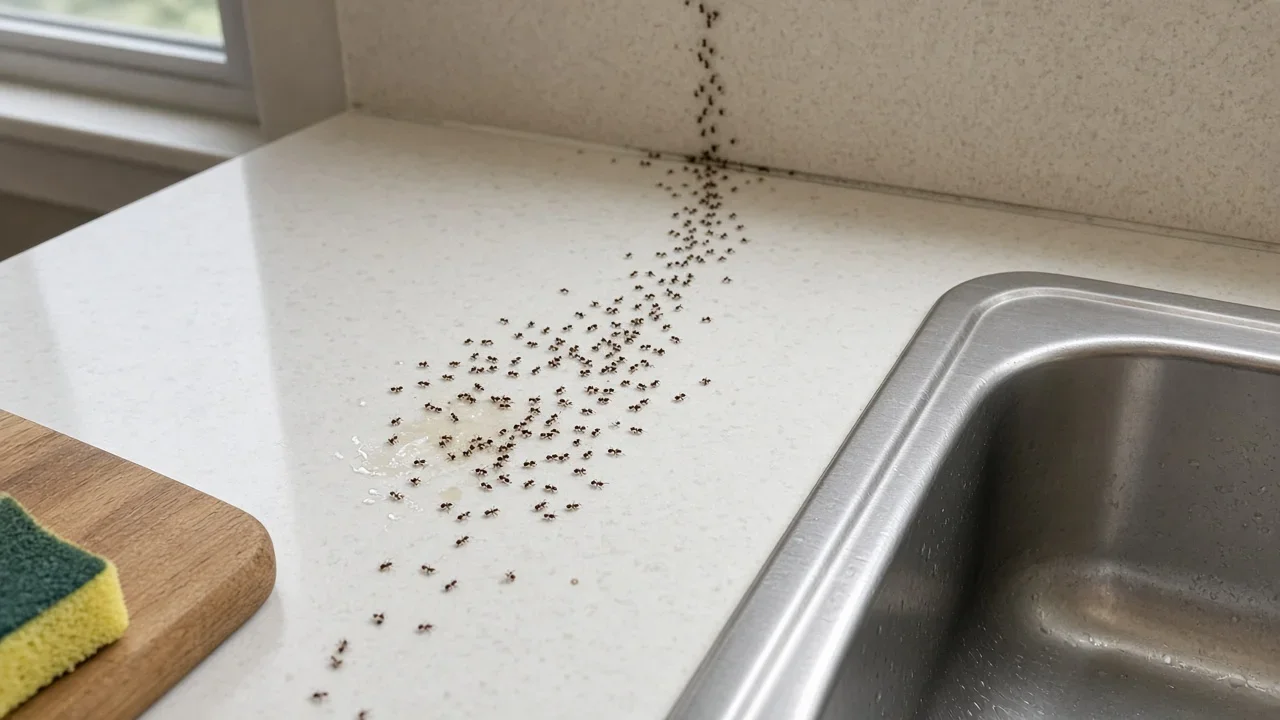
Few things are as frustrating as wiping up a line of tiny ants by the coffee maker, only to find them back the next morning. Ants in the kitchen are a common problem in Alabama homes, and they often turn up in the sink, the cabinets, or the bathroom too. This guide explains why ants keep coming back, why “sugar ants” is a nickname rather than one species, why ants seem to arrive right after a rain, and what you can do about it. It is general information, not an identification or inspection of your home.
The Short Answer
The ants on your counter are only a small part of the colony. Most of it, including the queens, is hidden somewhere else, often outdoors. Workers find food or water, lay down a scent trail, and other workers follow it. That is why the ants keep coming back:
- The colony is out of sight. Wiping up or spraying the ants you can see does not reach the nest, so the colony just sends more.
- The trail is still there. Ants follow a chemical trail between the nest and food, and it keeps leading new workers to the same spot.
- Something is still drawing them in. Crumbs, sweet spills, pet food, trash, and moisture under a sink all keep ants interested.
- Weather moves them. Heavy rain, dry spells, and cooler weather can push ants indoors looking for a better place to nest or feed.
Lasting control means dealing with the colony, not just the ants on the counter.
“Sugar Ants” Is a Nickname, Not a Species
Many people call any tiny ant trailing across the kitchen a “sugar ant.” It is a handy name, but it is not one species. Several different small ants raid kitchens, and they do not all nest in the same places or respond to the same baits. Mississippi State University Extension’s guide to controlling Argentine ants and odorous house ants in the home notes that Argentine ants and odorous house ants are the two most common home-invading ants in neighboring Mississippi, and that some small, shiny black ants are often called sugar ants. Alabama Extension names many of the same ants, including odorous house ants, little black ants, and Argentine ants, among those that get into homes here.
Most of these ants are hard to tell apart without magnification. Here are the usual suspects:
Odorous house ants
Odorous house ants are about 1/10 inch long and brown to blackish brown. The easiest clue is the smell: crushed workers give off an odor often compared to rotten coconut. They usually nest outdoors under mulch, rocks, and debris, but also in wall voids, and indoor nests are usually close to moisture. Colonies often have satellite nests with their own queens and move every few weeks, which is one reason they can be stubborn.
Argentine ants
Argentine ants are about the same size, light brown to brown, and can be told apart from odorous house ants by a stale, musty smell when crushed. They form very large outdoor populations and eat almost anything, from sweets to pet food. Indoor nests are often in moist spots such as bathrooms and kitchens, frequently linked to plumbing leaks.
Little black ants and other tiny ants
Little black ants are smaller, shiny black, and slower moving. Other tiny ants can trail through kitchens and bathrooms too. Some prefer sweets and others prefer grease or protein, which is part of why a store-bought bait works for one household and does nothing for another.
Bigger ants are a different conversation
If the ants are large and black or reddish black, or if winged ants are coming out inside, that is a different situation. Carpenter ants nest in wood, often wood that moisture has already softened, and finding them indoors is worth a closer look at roof leaks, plumbing leaks, and damp wood. Our post on termite damage vs. wood rot explains how carpenter ant galleries differ from termite damage and decay. Winged ants can also be mistaken for termite swarmers, and our guide to signs of termite damage covers the quick differences.
Why Ants Keep Coming Back to the Kitchen
A kitchen gives ants food, water, and warmth in one room. Once a scout finds something good, it lays a scent trail back to the nest and other workers follow, which is how a few ants become a steady line almost overnight. The usual reasons the problem keeps returning:
- Food is still available. Sweets, cereal, crumbs, open pantry bags, and grease around the stove all attract foragers. Ants can contaminate food, so throw out anything they have gotten into.
- Pet bowls are left out. Pet food that sits out all day feeds ants as well as pets.
- Trash and recycling. Soda cans and food scraps keep ants coming.
- The colony is not affected. Wiping up ants or spraying them with a household spray kills a few workers. The queens and the rest of the colony are not touched, and repellent sprays can make ants scatter and set up new trails.
- The colony has more than one nest. Ants like odorous house ants and Argentine ants often have several connected nests, indoors and out. Knock out one and another can keep sending workers.
Even a tidy home can have ants. They may be after tiny amounts of food or just water, and the colony may be nesting outside along the foundation.
Ants in the Sink, Cabinets, or Bathroom
Ants around a sink or in the bathroom are often there for water more than food. Many small house-infesting ants nest close to moisture, and indoor nests are frequently tied to a slow plumbing leak, a damp cabinet floor, or condensation. If you see ants in these spots, check:
- Under the kitchen and bathroom sinks for drips, damp particleboard, or a wet cabinet floor.
- Around the dishwasher, refrigerator water line, and ice maker.
- Where pipes come through the wall or floor, since gaps around pipes are common entry points.
- Along baseboards and the edges of countertops and backsplashes, where trails often run.
- Around tubs, showers, and toilets, especially where caulk has cracked.
Fixing a leak can do more for a bathroom ant problem than any spray. If wood stays damp, have the leak repaired and watch for larger ants, since damp wood can attract carpenter ants.
Why Ants Show Up After Rain
It is common to see a sudden wave of ants in the kitchen a day or two after heavy rain. When outdoor nests flood, colonies move, and a dry spot inside a wall or under a cabinet looks like a good place to go. Very hot, dry weather and the first cool snaps can do the same thing, as ants look for water or a more stable place to nest. Birmingham’s warm, humid climate keeps many ants active for much of the year, so a rainy week in spring, summer, or fall can bring them in. Cooler months bring other pests inside too; see why pests come indoors during an Alabama winter.
If ants keep trailing in for more than a week or two after the weather settles, the colony may have set up a nest in or near the house.
What You Can Do Right Now
- Watch before you wipe. Where the trail enters the room tells you a lot about where the colony is.
- Decide: wipe or bait. For a small, new trail, wiping it with soapy water removes the scent the ants are following. If you plan to use bait, leave the trail alone so the ants can find it.
- Remove what they want. Put sweets, cereal, and pet food in sealed containers or the refrigerator, wipe up spills and grease, pick up pet bowls between meals, and take out the trash often.
- Dry things out. Fix drips under sinks, wipe up standing water, and run bathroom fans.
- Close the entry point you found. Seal small gaps where you saw the trail coming in, such as around pipes, window frames, or baseboards.
- Work on the outside. Trim branches and shrubs that touch the house, and keep mulch and leaves pulled back from the foundation.
- If you use bait, use it on the trail. Bait works by letting workers carry it back to the colony. Place it right on the path the ants are using, and do not spray around it, or the ants will avoid it. Keep baits away from children and pets, and follow the label.
Alabama Extension’s insect diagnostician has said she does not advise “see ’em and kill ’em” sprays for ants that get into the home. On an Alabama Extension podcast about home invaders, she explained that the goal is to target the colony with bait, that most ants take sugar-based baits, and that bait has to be placed where the ants are trailing. When it works, the colony is typically gone within a couple of weeks. Mississippi State Extension cautions that baits can take several weeks, that ants sometimes stop taking a bait, and that you may need to switch products or locations.
When to Call a Professional
It is worth calling a professional when:
- The trail keeps coming back after a couple of weeks of cleanup and baiting.
- Ants are showing up in several rooms, or coming from outlets, baseboards, or wall voids.
- You see large black ants indoors, or winged ants coming out inside the house.
- Ants keep gathering around a sink, tub, or other damp area.
- You are not sure what kind of ant you have.
Identifying the ant matters because the right approach depends on where it nests and what it eats.
How Red Mountain Pest and Termite Control Can Help
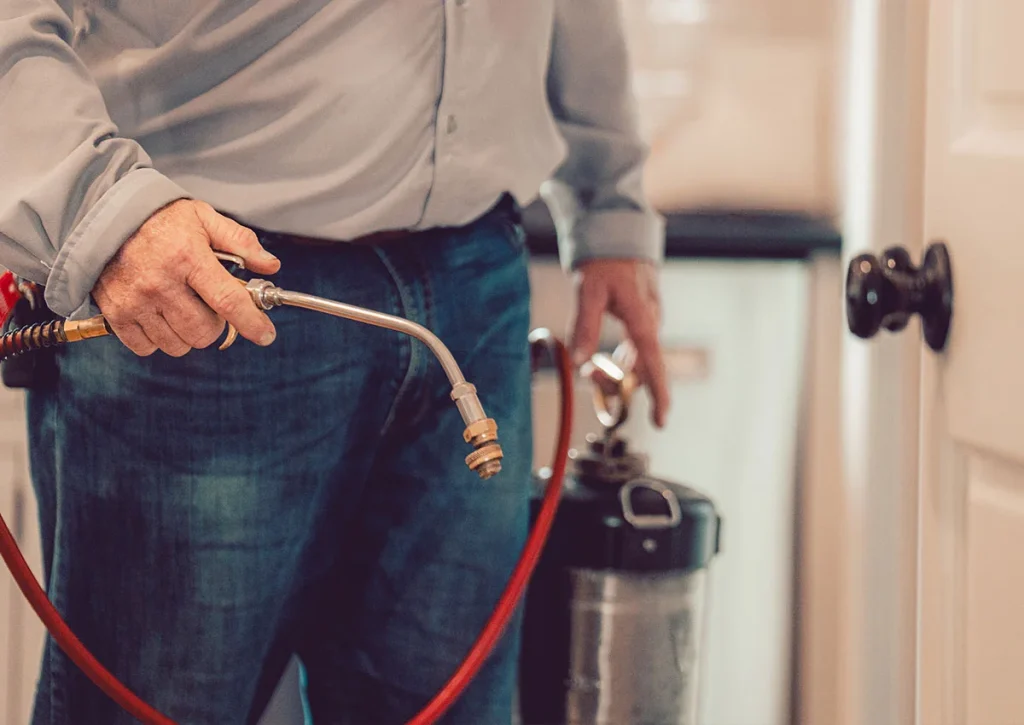
Red Mountain has served Birmingham homeowners since 2013. We are licensed, insured, and locally owned. With ant control, we start by confirming which ant you have, then follow the trail back to the nest. Our Property 360 walkthrough maps the trails and entry points ants are using, and treatment combines targeted baiting with a treated perimeter so we reach ants where they start, not just where you see them.
Because ants come back as the seasons change, ant control is part of our quarterly pest control plan, Total Defense Plus, which also covers roaches, spiders, and other common pests. If ants return between scheduled visits, our Pest Protection Guarantee means we come back and re-treat at no extra charge. If you would also like termite or mosquito protection, the 365 Bundle combines them with pest control on one plan. You can compare options on our service plans page. For more, see our new-home pest checklist and seasonal guide to household pests in Birmingham.
Whether you live in Mountain Brook, Homewood, Vestavia Hills, or elsewhere around Birmingham, if ants keep finding their way into your kitchen, call Red Mountain Pest and Termite Control at 205-637-3260 or request an assessment. Tell us where you are seeing them, and we will help you figure out the next step.
Frequently Asked Questions
Why do I have ants in my kitchen if it is clean?
Ants need very little. A few crumbs, a pet bowl, or a damp spot under the sink can be enough, and the colony is often nesting outside or in a wall. Cleaning helps, but it does not reach the colony.
What are sugar ants?
“Sugar ant” is a common nickname for small ants that go after sweets, not the name of one species. In Alabama homes, the ants people call sugar ants may be odorous house ants, Argentine ants, little black ants, or other small ants. Identifying the ant helps choose the right bait and treatment.
Why are there ants in my bathroom?
Usually for water. Many small ants nest near moisture, and indoor nests are often tied to slow leaks, damp cabinets, or gaps around tubs and sinks. Fixing the moisture problem is an important part of getting rid of them.
Why do ants come inside after it rains?
Heavy rain can flood outdoor nests, and colonies move to drier spots, sometimes inside a wall or under a cabinet. Very hot, dry weather and cooler weather can also drive ants indoors.
Should I spray the ants I see?
Spraying kills the ants you can see, but it does not reach the colony, and it can drive ants away from bait. If you use bait, put it on the trail and leave the trail alone so workers carry it back to the nest.