
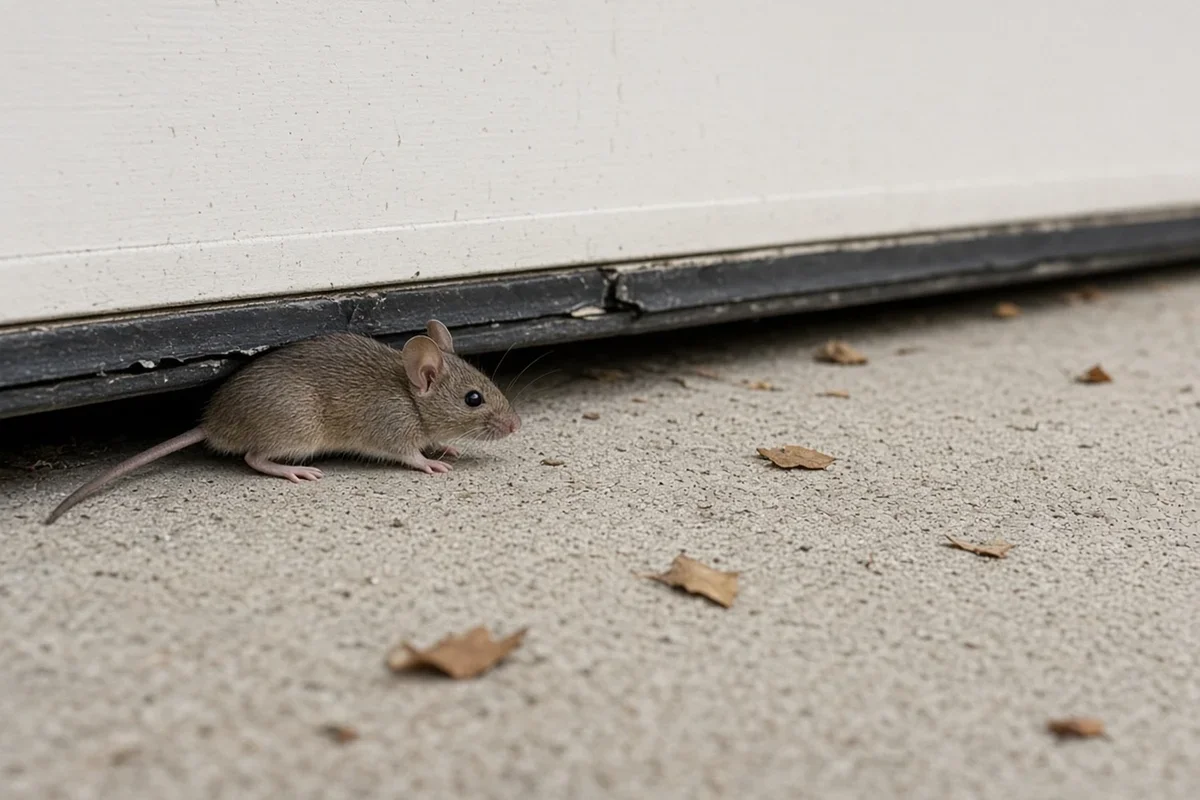
The garage is often the first place homeowners notice trouble: a chewed bag of birdseed, a few dark pellets along the wall, or shredded paper in the corner of a storage box. Mice in the garage are common around Birmingham, especially once fall nights turn cool. This guide explains why mice move into garages, the signs to look for, how mice end up in cars, and simple steps to make your garage less inviting. It is general homeowner information, not an inspection of your home or advice on vehicle repair.
The Short Answer
A garage gives mice most of what they need in one place, and it is usually easier to get into than the house. The usual reasons mice settle in:
- It is easy to get in. Worn door seals, gaps at the corners of the big door, and a door left open for an afternoon all give mice a way inside.
- There is food. Birdseed, pet food, grass seed, trash cans, and an extra pantry shelf are common garage items, and all of them feed mice.
- There is shelter. Cardboard boxes, holiday decorations, and clutter along the walls make quiet, protected places to nest.
- It is warmer than outside. When the weather turns cold, a garage is an easy step up from a shrub bed or woodpile.
The fix is usually not one product. It is closing the gaps, taking away the food, and cutting down the hiding places.
Why Mice Get Into Garages
The garage is the easiest door on the house
A garage door is a big moving opening, and it rarely seals as well as a front door. Rubber bottom seals crack and flatten, the side seals pull away, and uneven concrete can leave a gap at one end. Mice do not need much: they can slip through a gap as small as a dime. Alabama Extension’s guide to controlling rats and mice around your home notes that rats and mice can climb wires, cables, vines, and rough siding to reach higher openings. Side doors without a sweep, gaps where pipes and wires pass through the wall, and doors that stay open while you work in the yard all add more ways in.
We store a lot of mouse food in garages
House mice eat almost anything but prefer grains and seeds, according to Alabama Extension. That makes the garage a pantry for them. Common draws include:
- Bags of birdseed and grass seed
- Pet food in paper bags, and bowls left out for outdoor pets
- Trash and recycling bins with loose lids or food residue
- Bulk groceries, snacks, or a second refrigerator with crumbs around it
A mouse only needs small amounts, and it can live with little or no free water because it gets most of the moisture it needs from food.
Clutter and cardboard make good nests
Mice shred paper, cloth, and other soft materials to build nests. Stacks of cardboard boxes, old blankets, holiday decorations that sit untouched for months, and piles along the back wall all give them cover. The University of California’s house mouse Pest Notes specifically suggest searching behind boxes, in drawers, in garages, and around woodpiles for nests made of finely shredded material.
Cool weather pushes them in
UC IPM notes that where house mice live outdoors, they often move into homes in autumn when nighttime temperatures drop. In Birmingham, that is usually the season when homeowners start finding signs in the garage. Our guide to why pests come indoors during an Alabama winter covers the other pests that tend to show up around the same time.
Signs of Mice in the Garage
Mice are mostly active at night, so you may see the evidence before you ever see a mouse. Look for:
- Droppings. Small, dark, rice-shaped pellets along walls, on shelves, and near stored food.
- Chewed packaging. Holes in seed bags, pet food bags, and boxes, often with spilled food nearby.
- Nesting material. Shredded paper, fabric, or insulation tucked into a box, drawer, or corner.
- Gnaw marks. Fresh chewing on wood, plastic, or the edges of the door seal.
- Tracks and trails. Small footprints or smudge marks in dust along the base of the walls.
- A musky odor. A stale smell in closed-up corners or storage areas.
Garage rodents are not always mice. If the droppings look bigger than a grain of rice, you may be dealing with rats instead. Our guide to roof rats vs. Norway rats explains the difference. Before you clean up, read our mouse droppings cleanup precautions, since sweeping or vacuuming droppings can stir contaminated dust into the air.
Mice in the Car Engine
A parked car in a garage with mice can become part of the problem. The engine compartment is sheltered, and it stays warm for a while after you park. UC IPM notes that house mice can damage vehicles by gnawing on electrical wires. If you find nesting material, seeds, or droppings under the hood, or chewed wires or hoses, have a mechanic check the vehicle before you rely on it, and clean up droppings with the same precautions you would use in the house. Drive the car regularly and keep food wrappers out of it. Do not put poison baits or traps inside the engine compartment.
How to Make Your Garage Less Inviting to Mice
A free hour on a dry afternoon can make a big difference. Work through these steps:
- Check the garage door seals. As general upkeep, close the door and look for daylight along the bottom and sides. A cracked or flattened bottom seal, or side seals that have pulled away, should be replaced so the door shuts tightly. Mice can slip through a gap as small as a dime.
- Check the other doors. Side doors and the door between the garage and the house should close tightly. As general upkeep, add or replace a sweep or threshold seal if you can see a gap at the bottom.
- Keep the big door closed. Do not leave it open overnight or for long stretches while you are away from the garage.
- Seal small gaps with the right material. Look where pipes, wires, and vents pass through the walls. UC IPM recommends wire screen, coarse steel wool, metal, or concrete for plugging holes, and cautions that rubber, vinyl, wood, and expanding foam are not effective because mice can chew through them. (Garage door seals are a separate maintenance job, not part of sealing holes in the walls.)
- Store food in hard containers. Move birdseed, pet food, and grass seed into metal cans or heavy containers with tight lids. Feed outdoor pets only what they eat at one meal.
- Manage trash. Keep lids closed, rinse recycling, and take bins out regularly.
- Cut the clutter. Swap cardboard for plastic bins with tight lids, store items on shelves rather than the floor, and leave a little space between stored items and the walls so you can see along the baseboards.
- Work on the outside. Pull back woodpiles, debris, and dense plants from the garage walls, and trim vines and shrubs that touch the house.
Skip the plug-in gadgets: UC IPM reports little evidence that ultrasonic or other sound, magnetic, or vibrating devices will drive established mice out of a building.
When Garage Mice Become a House Problem
An attached garage shares walls, wiring, and sometimes attic space with the rest of the home, so mice that settle there do not always stay there. It is worth calling a professional when:
- You keep finding fresh droppings after cleaning up.
- You see signs inside the house, such as droppings in the kitchen or pantry.
- You hear scratching in the walls or ceiling at night. Our guide to rodents in the attic or walls can help you sort out the sounds.
- You find chewed wiring in the garage or a nest in your vehicle.
- You cannot find how the mice are getting in.
If you hear larger animals, or find signs of squirrels or raccoons, that is a job for a wildlife specialist rather than a pest control company.
How Red Mountain Pest and Termite Control Can Help
Red Mountain has served Birmingham homeowners since 2013. We are licensed, insured, and locally owned. When mice are getting into a garage, the goal is to find out why. Our Property 360 walkthrough looks at the whole home, including foundation cracks and weep holes, gaps around pipes and utility lines, dryer and attic vents, garage door gaskets, and gaps along the roofline. We show you what we found before any work starts.

From there, our rodent exclusion service seals the entry points with steel mesh, mortar, and other rodent-resistant materials, and is priced to your home after the walkthrough. If mice are already active, our mouse and rat control removes them first with targeted trapping and tamper-resistant bait stations. To keep watch after that, our Total Defense Plus plan includes perimeter rodent bait boxes serviced every visit. You can compare options on our service plans page. For a room-by-room look at the garage, attic, and crawl space, see our new-home pest checklist.
Whether you live in Mountain Brook, Homewood, Vestavia Hills, or elsewhere around Birmingham, if mice keep finding their way into your garage, call Red Mountain Pest and Termite Control at 205-637-3260 or request an assessment. Tell us what you are finding and where, and we will help you figure out the next step.
Frequently Asked Questions
Why do I have mice in my garage?
Most often because the garage is easy to get into and has food and shelter. A worn door seal, birdseed or pet food in paper bags, and cardboard boxes along the walls are a common combination, especially once the weather cools in the fall.
Can mice get into my house from the garage?
Yes. An attached garage shares walls, wiring, and sometimes attic space with the house. Mice can move through gaps around pipes and wires or under the door into the house, so it is worth sealing that door and dealing with garage mice early.
How do I know if mice are in my car engine?
Look for nesting material, seeds, or droppings under the hood, chewed wires or hoses, or a musty smell from the vents. If you find any of these, have a mechanic check the car and clean up with care.
Do ultrasonic repellers keep mice out of a garage?
Not reliably. UC IPM reports little evidence that ultrasonic, magnetic, or vibrating devices drive established mice out of buildings. Sealing gaps, storing food in hard containers, and reducing clutter are more reliable.
How small of a hole can a mouse fit through?
Mice can enter through openings as small as a dime. That is why a slightly worn garage door seal or a gap around a pipe can be enough.