Does mulch attract termites? It’s a fair question for Birmingham homeowners, especially when it’s time to refresh the beds along the house in spring or fall. The short version: mulch doesn’t draw termites in from across the yard, but the way it’s laid next to your foundation can make conditions friendlier for termites that are already nearby, and it can hide the warning signs you’d otherwise see. This guide covers what really happens under a mulch bed, whether the type of mulch matters, and simple landscaping choices that keep your foundation easier to protect. It is general homeowner information, not an inspection or diagnosis of your home.
The Short Answer
- Mulch doesn’t attract termites. Subterranean termites already live in the soil around most Birmingham-area homes. Mulch doesn’t call them in.
- It does change the conditions. A mulch layer keeps the soil underneath damp and evens out temperature swings, which helps termites that are already foraging there.
- Thick mulch hides the evidence. Mulch piled against siding or over the top of the foundation can hide mud tubes, the clearest outdoor sign of termites.
- Placement matters more than type. How deep the mulch is and how close it sits to the house matter more than whether it’s hardwood, pine bark, or pine straw.
Does Mulch Attract Termites? What Happens Under a Mulch Bed
Eastern subterranean termites, the species behind most termite damage in our area, nest in the soil and send workers out through a network of narrow tunnels to look for wood. They need steady moisture to survive, and they dry out quickly in open air. That’s why the soil under a mulch bed matters more than the mulch itself.
Moisture and steady temperatures
Mulch does its job in the garden by holding moisture in the soil and shielding roots from heat and cold. Those same conditions suit termites. Foraging termites aren’t pulled across the yard by a fresh bed of mulch, but when their tunnels reach soil that stays damp and mild, they’re more likely to stay and keep working in that area. When that bed sits right against your foundation, the activity sits right against your house.
Cover for mud tubes
To get from the soil to the wood in a house, subterranean termites build pencil-width mud tubes up the foundation. On a bare foundation wall, those tubes are easy to spot. When mulch, pine straw, or soil is piled up over the foundation and against the siding, termites can travel under that cover and reach siding, trim, or a door frame without leaving anything visible. A deep bed doesn’t create the termites, but it can let them go unnoticed far longer. Our guide to signs of termites and termite damage shows what mud tubes and other evidence look like.
Can bagged mulch bring termites home?
It’s possible to find a few termites in mulch, but bagged or bulk mulch is an unlikely way to bring a termite problem home. Chipping and shredding wood is hard on termites, and the few that make it through are cut off from their colony and rarely survive long. The bigger risk is the termite colonies already living in the soil around your property. Larger pieces of old wood are a different story. Used railroad ties, salvaged timbers, and old landscape timbers can carry live termites, so it’s worth inspecting any reclaimed wood before you place it in your yard.
Does the Type of Mulch Matter?
Homeowners often ask whether switching mulch will solve the problem. The type makes less difference than most people expect.
Hardwood and pine bark mulch
Termites can feed on wood mulch, but it’s poor food for them, and they don’t thrive on it. The main concern with hardwood and pine bark is the moisture they hold and how thickly they tend to build up as new layers are added year after year.
Pine straw
Pine straw is a favorite in yards from Mountain Brook and Homewood to Vestavia Hills. It’s light and drains well, but it still shades the soil and holds moisture underneath, and it piles up fast when new bales go on top of old ones. Treat it the same way you would wood mulch near the foundation.
Cedar and cypress
Cedar and cypress are often sold as “termite-resistant.” Some of these woods are less appealing to termites, but no mulch makes a bed termite-proof. It still keeps the soil damp, so placement still matters.
Rubber mulch and gravel
Inorganic ground covers don’t feed termites, but they don’t stop them either. Termites still forage in the moist soil underneath gravel and rubber mulch. These materials can make sense near the foundation for other reasons, but they aren’t a substitute for termite protection.
How to Mulch Near Your Foundation
You don’t have to give up mulch to protect your home. A few habits keep beds attractive and keep your foundation easy to check. For a research-based reference, University of Florida IFAS Extension recommends keeping mulch to a thin layer, under 2 inches, within 12 inches of the foundation so the soil there can dry out.
- Keep it thin next to the house. Save the deeper layers for the outer part of the bed and keep the strip closest to the wall shallow, or leave a narrow strip bare.
- Leave the foundation visible. Keep about 6 inches of foundation showing between the top of the mulch or soil and the bottom of the siding. That gap is where you, or an inspector, can spot mud tubes.
- Keep mulch off siding, trim, and door frames. Mulch should never touch wood siding, door and window trim, or the bottom of a porch or deck post.
- Rake and thin before you add more. Instead of spreading new mulch over old every season, rake out and thin the old layer first so the bed doesn’t creep higher up the wall.
- Don’t build up the grade. Adding soil or raised beds against the house brings the ground closer to the wood. Keep the soil line where it was meant to be.
- Move water away from the wall. Point downspouts away from the foundation, keep gutters clear, and aim sprinklers and drip lines at the plants rather than the brick.
- Give the wall some air. Trim shrubs so they don’t touch the house. Air and sunlight help the soil along the foundation dry out, and you can actually see the wall.
If you’re moving into a new-to-you house, our move-in pest-prevention checklist includes a quick foundation walk that pairs well with these steps.
Landscaping Choices That Matter Even More Than Mulch
Mulch gets a lot of attention, but other things in the yard often give termites a better opportunity:
- Wood touching soil. Landscape timbers, wooden bed borders, lattice, fence posts, and deck or porch supports that sit directly in the dirt give termites a direct path to wood.
- Firewood and lumber against the house. Stacks of firewood or scrap lumber against the wall create a hidden, damp spot right where you don’t want one. Keep them off the ground and away from the house.
- Stumps and buried wood. Old stumps, roots, and construction scraps buried near the foundation can feed a colony close to your home.
- Persistent moisture. Leaky outdoor faucets, AC condensate lines, and low spots where water pools after a storm keep the soil wet. Moisture problems and termites so often show up together. Our post on termite damage vs. wood rot explains why.
If Your Home Has Sentricon Stations
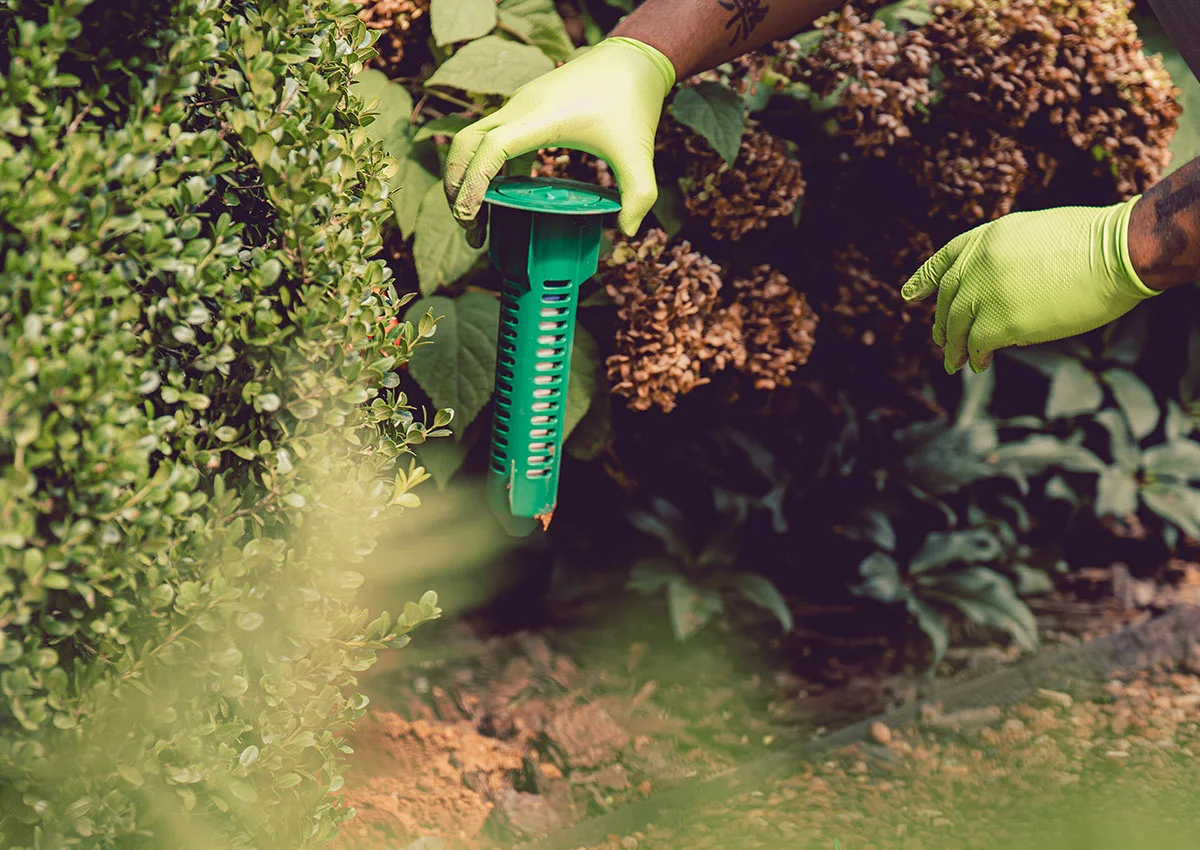
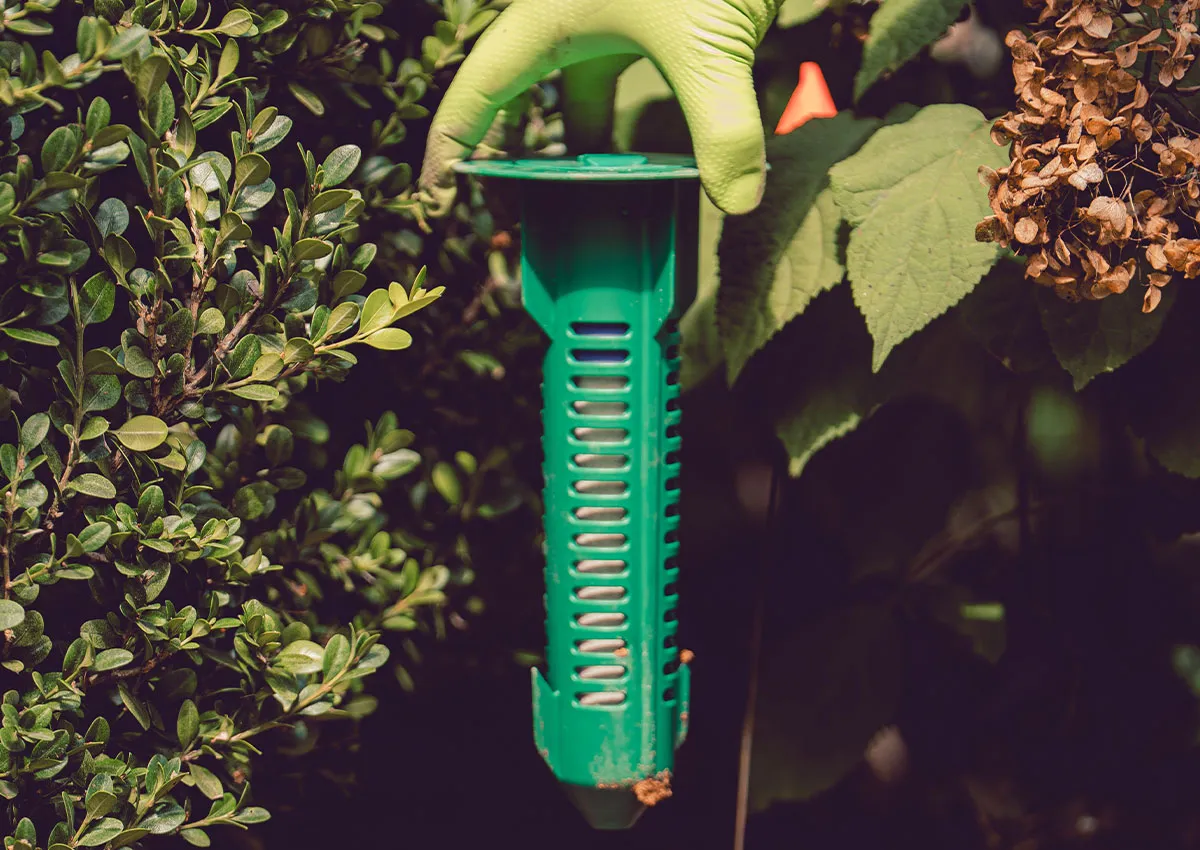
If your home is protected with the Sentricon termite baiting system, the in-ground stations sit in the soil around your foundation, usually a foot or two out from the wall. That often puts them right in your landscape beds. Mulch around them is fine, but a few simple habits help:
- Keep the station lids visible. Don’t bury them under mulch, pine straw, soil, or pavers.
- Don’t pull stations out or move them when you dig or replant.
- If you’re planning new beds, a patio, or other landscaping along the house, give us a call first so we can help keep your stations in place.
If your home has an older liquid soil treatment instead, avoid digging up or adding soil right along the foundation, since that can disturb the treated soil. Our comparison of termite baits vs. liquid treatments explains how the two approaches differ.
Signs to Watch for in Your Beds
When you’re pulling back mulch or weeding along the house, keep an eye out for:
- Mud tubes running up the foundation, piers, or the back of steps.
- Live termites in mulch or soil right beside the house. These are small, pale, soft-bodied insects that scatter when exposed.
- Damaged wood in borders, posts, or trim near the ground that feels soft or looks hollowed out along the grain.
- Discarded wings on windowsills or near doors after a spring swarm. Our guide to termite swarmers indoors and outdoors explains what each kind of swarm can mean.
Finding termites in the mulch doesn’t automatically mean your house is infested, but it does mean a colony is foraging close by. Resist the urge to spray them or dig them out. That only affects the few you can see, not the colony in the soil. Note where you found them and schedule an inspection.
How Red Mountain Pest and Termite Control Can Help
Red Mountain has served Birmingham homeowners since 2013. We are licensed, insured, and locally owned.

A professional termite inspection is the best way to know where your home stands. Our specialists check the crawl space, sill plates, foundation walls, and any wood that touches soil, looking for active signs and the conditions that invite termites in, like moisture and wood-to-ground contact. You’ll get a plain-language explanation of what we found and your options. If termites are active, we use the Sentricon system, and Termite Guard, our ongoing termite control program, includes the Termite Bond, an annual inspection, and Sentricon management. We do not repair termite damage. If repairs are needed, you’ll need a qualified contractor.
If you’d rather cover termites and everyday pests together, you can compare year-round options, including the 365 Bundle, on our service plans page.
Wherever you live in the Birmingham metro area, if you’re wondering whether your mulch beds are inviting termites, call Red Mountain Pest and Termite Control at (205) 637-3260 or request a free quote. Tell us what you’re seeing around your foundation, and we’ll help you figure out the next step.
Frequently Asked Questions
Does mulch attract termites to my house?
No. Mulch doesn’t attract termites from elsewhere in the yard. It keeps the soil underneath moist and mild, which helps termites that are already foraging there, and thick mulch against the foundation can hide their mud tubes. Keeping mulch thin near the house and leaving the foundation visible addresses both concerns.
How far should mulch be from my foundation?
Keep the strip closest to the house thin, or leave a narrow strip bare, and keep about 6 inches of foundation visible below the siding. Mulch should never touch siding, trim, or door frames.
Is pine straw better than wood mulch for termites?
Not by much. Pine straw drains well, but it still shades and holds moisture in the soil, and it builds up quickly when new bales go on top of old ones. Depth and placement matter more than the material.
Can I bring termites home in bagged mulch?
It’s unlikely. Termites rarely survive the chipping process, and the few that do are cut off from their colony and don’t last long. The colonies already in the soil around your home are the bigger concern. Be more cautious with reclaimed railroad ties and old timbers.
Should I remove all the mulch from around my house?
Usually not. Mulch helps your plants and keeps mud from splashing onto the house. Thin it out next to the foundation, keep it off the siding, and make sure you can see the top of the foundation. If you’re unsure about your home’s risk, an inspection is the clearest answer.
Is rubber mulch or gravel termite-proof?
No. Termites don’t eat rubber or rock, but they still forage in the moist soil underneath. Inorganic covers don’t replace termite protection or regular inspections.