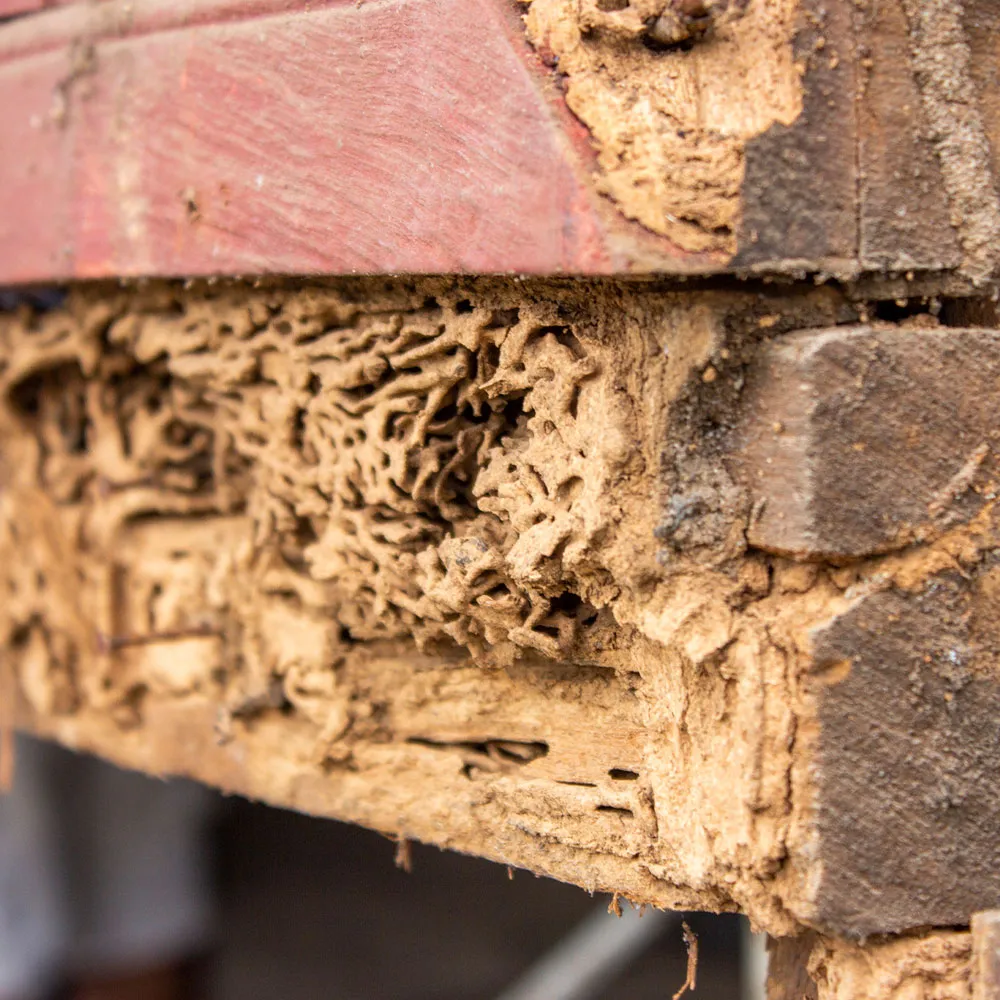
Termite damage and wood rot can both leave soft, weak wood, but they usually look different once you get a close view. Subterranean termites hollow wood from the inside, leaving tunnels that run along the grain, often with dried mud or soil packed in them, while the surface may still look normal. Wood rot is fungal decay that only gets going in wood that has stayed wet. It changes the wood itself: rotted wood may turn darker brown and crack across the grain into small, cube-like chunks, or turn pale, spongy, and stringy. Dirt-lined tunnels point toward termites; crumbly or stringy wood with no tunnels, right where water collects, points toward rot. This guide walks through those clues. It is educational, not a diagnosis of your home, and it does not assess structural safety.
The Short Version: Look Inside the Wood, Then Look for Water
When you find soft wood, two questions narrow things down: what does the damaged area look like inside, and is water getting to it?
Clues that point toward termites:
- Tunnels or layered galleries that follow the grain of the wood
- Dried mud, soil, or clay-like material inside those galleries
- A thin outer layer of wood that looks fine until it is pressed or probed
- Mud tubes on nearby foundation walls, piers, or plumbing, or shed wings near windows and doors
Clues that point toward wood rot:
- Wood that has turned darker brown and cracked across the grain into cube-shaped pieces
- Wood that looks bleached or whitish and feels spongy or stringy
- Damage that is worst right where water drips, pools, or soaks in, and fades out as the wood gets drier
- No tunnels and no soil, just wood that crumbles, shrinks, or flakes
Neither list is proof by itself, and the same piece of wood can show both.
What Termite Damage Looks Like Up Close
The termites most Birmingham-area homeowners deal with are subterranean termites. They live in the soil and travel into a home through mud tubes or hidden cracks, and they eat wood from the inside. According to the USDA Forest Products Laboratory, they make galleries that generally follow the grain and leave a shell of sound wood that hides their work. That is why termite-damaged wood can look ordinary until it is probed.
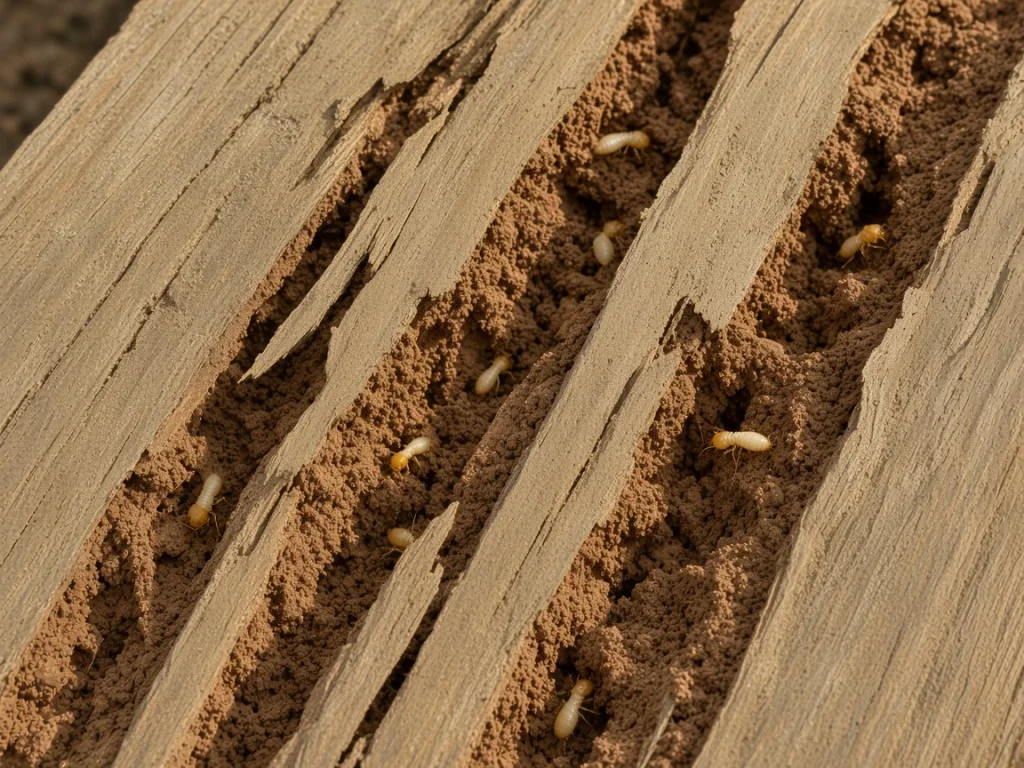
When termite-damaged wood is opened up, it often has a layered, honeycombed look, with softer wood eaten away between harder bands. Subterranean termites bring soil with them, so tunnel walls are often speckled with mud, and some chambers may be packed with it. Mississippi State University Extension notes that sagging floors or damaged wood could come from wood rot or other causes, but timbers with galleries containing dried dirt indicate termite damage.
For other clues, such as mud tubes, swarmers, and signs in walls, see our guide to signs of termites and termite damage.
What Wood Rot Looks Like
Wood rot, or decay, is caused by fungi that feed on wood. The key requirement is water. The Forest Products Laboratory’s chapter on biodeterioration of wood explains that serious decay happens only when wood gets wet well beyond what humid air alone can do, usually from rain, condensation, leaks, or contact with wet ground. Wood that is kept dry will not decay, and existing decay stops progressing once the wood dries out.
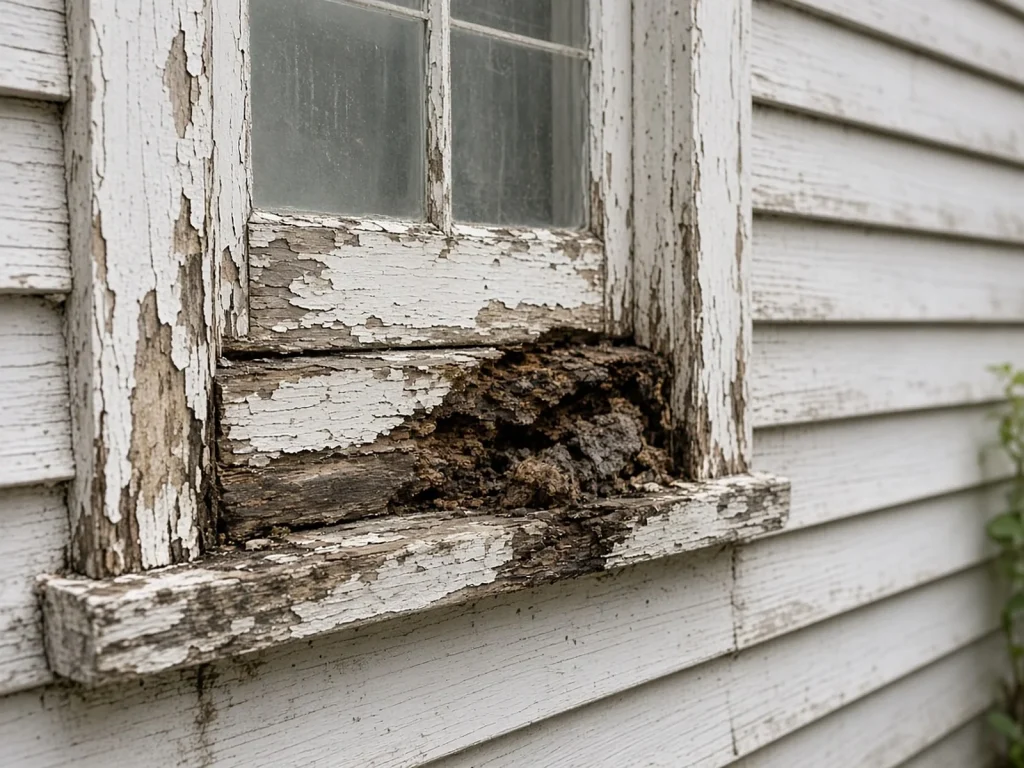
There are a few common types, and they look different:
- Brown rot. The wood turns browner, cracks across the grain into cube-like blocks, shrinks, and can eventually crumble into powder. It is common in softwoods such as pine.
- White rot. The wood may look bleached or whitish and feel spongy or stringy. It often keeps its shape until the decay is advanced, so it can be easy to overlook.
- Soft rot. A shallower decay that softens the outer surface of wood that is repeatedly wet and dry, while the wood just beneath may still be firm.
You may hear brown, crumbly decay called “dry rot.” The name is misleading. Decay needs moisture to develop, even if the wood looks dry by the time someone finds it.
Around a house, rot usually shows up where water lingers: window sills and the bottoms of door frames, exterior trim under an overflowing gutter, deck boards and stair treads, wood near a leaking pipe or toilet, and sill plates or framing where soil, mulch, or splash-back keeps wood damp.
Five Clues That Help Tell Them Apart
1. Which way the damage runs
Termite galleries generally run with the grain. Brown rot cracks the wood across the grain, giving it a checkered, cube-like pattern. If the damage looks like a grid of small blocks, rot is the stronger suspect.
2. What is inside the cavities
Soil or dried mud in the tunnels is one of the most telling termite clues. Rotted wood usually has no tunnels at all; it simply breaks down. Clean, smooth galleries with no mud are another story. Carpenter ants carve those to nest in, often in wood already softened by moisture, and push sawdust-like debris out of the nest.
3. How the surface looks
Termites tend to leave a thin outer shell that hides the damage. Rot often shows on the surface first through discoloration, cracking, flaking, or a sunken look. Both can cause paint to bubble or blister, so paint alone will not settle the question.
4. Where the water is
Rot follows water closely. When the softest wood sits directly under a drip line or around a leak and gets firmer as you move away, decay is likely part of the story. Termites also seek out moisture, though, so a wet area does not rule them out.
5. What else you find nearby
Mud tubes, shed wings, or live termites point toward termites. A stained ceiling, a long-running drip, or fungal growth on the wood points toward a moisture problem that can lead to rot.
Water Damage vs. Termites: Often It Is Not Either-Or
Moisture is the common thread. Damp crawl spaces, leaks, poor drainage, and wood touching soil create good conditions for decay fungi, and they also make a home more inviting to subterranean termites. The Forest Products Laboratory notes that the precautions that help against subterranean termites are also generally helpful against decay.
That means one piece of wood can have both problems. A leaking sill might show brown rot along the outer edge and termite galleries deeper inside. Older termite damage can also remain from an infestation that was treated years ago, so damage by itself does not always mean termites are active today. Sorting out what is current, what is old, and what is rot is part of what a careful termite inspection is for.
How to Check Soft Wood Without Making Things Worse
- Take clear photos of the damaged area and anything around it, such as stains, drips, mud tubes, or wings.
- Gently probe exposed wood with a flathead screwdriver to see how far the softness reaches. Do not pry apart framing or cut into walls.
- Look inside any cavity you can see without breaking more wood. Note whether you see soil, crumbly brown cubes, stringy fibers, or clean tunnels.
- Leave mud tubes and any insects in place for an inspector to see, and skip store-bought sprays.
- Note where water might be coming from: a gutter, a downspout, a plumbing line, a window, or soil piled against siding.
- If a floor, deck, or set of stairs feels spongy, sags, or moves, keep weight off it and have a qualified contractor or structural professional look at it. This article cannot tell you whether any part of your home is safe.
Who Handles What
Because termites and rot often share a cause, the fix can involve more than one professional. Fixing leaks, drainage, and ventilation problems and repairing or replacing damaged wood are jobs for the appropriate contractor, such as a plumber, roofer, or carpenter. Having the area checked for termites before damaged wood is covered up or replaced can help make sure active termites are not sealed in behind new material.
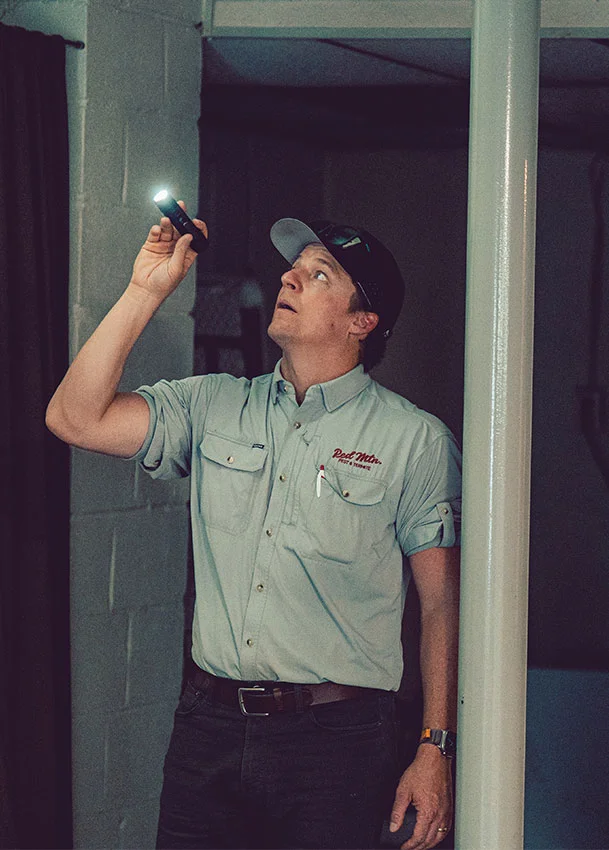
That inspection is where Red Mountain Pest & Termite comes in. Our termite inspections check the crawl space, sill plates, foundation walls, and wood that meets soil for active signs, along with the conditions that invite termites, like moisture and wood-to-ground contact. If we find activity, we will walk you through your termite control options, including Sentricon® termite baiting, which targets the colony at its source. For ongoing protection, our Termite Guard plan includes the Termite Bond, an annual inspection, and Sentricon station management; you can compare it on our service plans page.
If you have found soft or crumbling wood and are not sure whether you are looking at termites, rot, or both, call Red Mountain Pest & Termite at 205-637-3260 or request a free quote. Tell us what you found and where, and we will help you figure out the next step for your home around Birmingham.
Frequently Asked Questions
Does soft wood always mean termites?
No. Soft wood can come from fungal decay, termites, carpenter ants, or a mix. Soil-filled galleries that follow the grain point to subterranean termites. Wood that cracks into brown cubes or turns pale and stringy, without tunnels, points to rot. An inspection can sort out the difference.
Can wood rot attract termites?
The same moisture that lets decay fungi grow also makes wood more appealing to subterranean termites, and carpenter ants often nest in wood that moisture has already softened. Finding rot is a good reason to check for insects too.
Is “dry rot” actually dry?
Not when it starts. Decay fungi need wet wood to grow, though decayed wood can dry out later and look dry and crumbly when someone finds it. If you see rot, there was a moisture source at some point, and it may still be active.
Should I fix the leak or call about termites first?
Both matter. Stopping the moisture limits rot. If you see termite clues or are unsure what caused the damage, have the area inspected before the wood is replaced or covered.