
Winter pests in Alabama are less about new bugs showing up and more about familiar ones changing address. When nights turn cold, mice, rats, and a handful of insects start looking for the same things you want in December: a warm, dry place with food nearby. A house offers all three, and the gaps that let a draft in can let a mouse or a stink bug in too. This guide explains why pests move indoors during cold weather, where they get in, which winter habits invite them, and what to check around your home. It is educational, not a diagnosis of your home.
Why Pests Head Indoors When It Turns Cold
Outdoors, food, water, and shelter get harder to find as temperatures drop. Alabama Cooperative Extension notes that cooler weather prompts many bugs and rodents to seek winter refuge, and that homes stay vulnerable to ants, cockroaches, silverfish, spiders, and other pests well into the cooler months. A heated house, a quiet attic, or a cluttered garage is an easy substitute for a hollow log.
Our winters also tend to swing between cold snaps and mild spells. Warm afternoons can wake up insects tucked into a wall, and a hard freeze can push rodents to look harder for shelter. Fewer bugs in the yard does not mean pest season is over inside.
Winter visitors generally fall into three groups.
Mice and rats looking for warmth
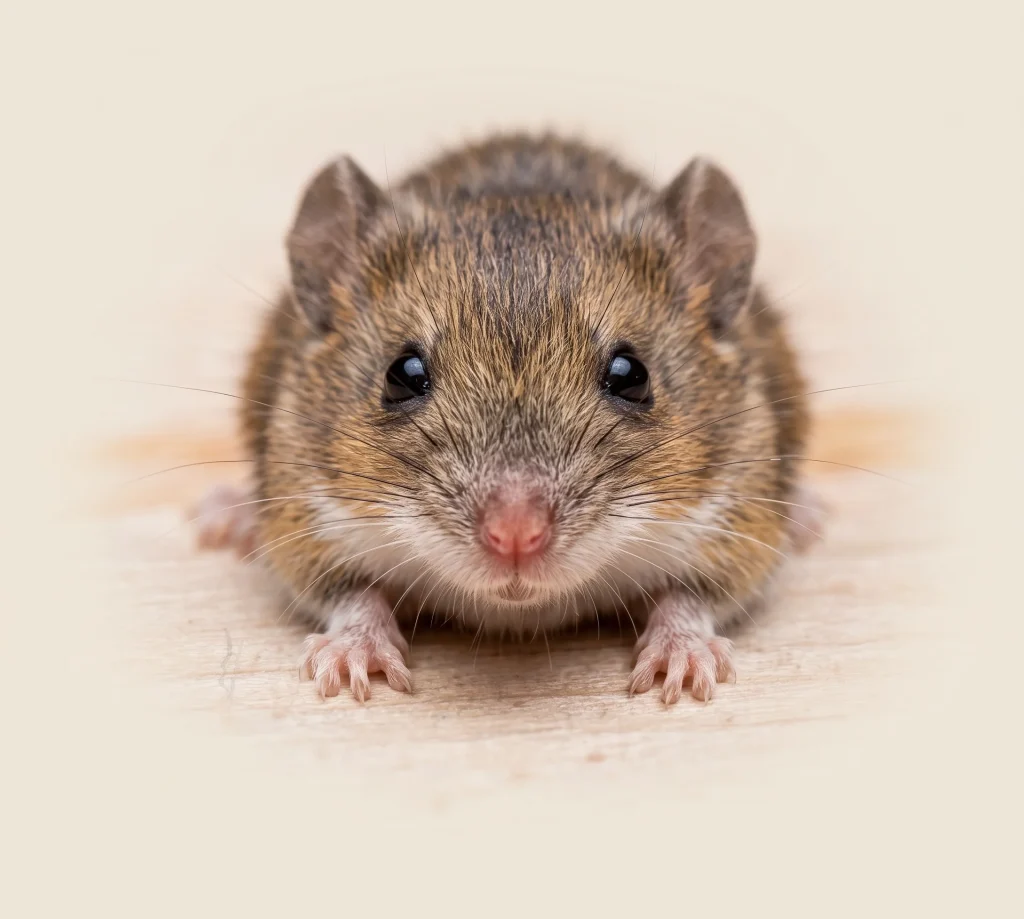
Rodents are the classic cold-weather invader. Attics, wall voids, crawl spaces, and garages give them warmth and quiet travel routes, and a bag of birdseed or pet food gives them a reason to stay. Mice can squeeze through a gap about the size of a dime. If you are hearing scratching at night, our guide to recognizing rodent activity in the attic or walls covers the sounds and clues in detail, and our roof rat vs. Norway rat guide helps if you suspect a rat.
Insects that spend the winter in your walls
Some insects do not come in to feed or breed. They come in to wait out the cold. Alabama Extension’s guide to fall invaders lists kudzu bugs, brown marmorated stink bugs, multicolored Asian lady beetles, boxelder bugs, and Asian cockroaches among the most common. These insects gather on sunny walls in fall, then slip into wall cavities, attics, and basements. On a warm winter day, some find their way into living areas and show up on windows and walls.
The good news is that Extension describes them as mostly a nuisance, not carriers of human disease, though they can stain surfaces and leave an odor when crushed. Seeing a few lady beetles on a sunny window in January does not mean they are breeding in your house.
Pests that never left
Some pests do not care what the thermometer says because they already live indoors. German cockroaches can keep breeding in a warm kitchen all winter, and silverfish stay comfortable in humid bathrooms, closets, and storage areas. Spiders may also stay active indoors, following the insects they eat. If you are seeing small roaches near the sink or dishwasher, our palmetto bug and German cockroach identification guide helps you sort out what you have. One wrinkle: Extension notes that the outdoor Asian cockroach looks nearly identical to the German cockroach, but it flies and is drawn to lights. A good photo helps tell them apart.
How Winter Pests Get Into Alabama Homes
Most winter invaders use openings you would never notice from inside. Alabama Extension’s pest-proofing advice focuses on the same spots again and again:
- Doors. Worn weatherstripping, missing door sweeps, and garage doors that no longer seal at the bottom.
- Windows and screens. Torn screens and cracked caulk around frames and sills.
- Utility penetrations. Gaps where pipes, cables, dryer vents, and A/C lines enter the house.
- Foundation and brick. Loose mortar, cracks, and openings around crawl space vents and doors.
- Roofline. Gaps along eaves, soffits, and fascia, plus unscreened attic and chimney openings.
- Landscaping. Tree limbs and shrubs touching the house act as bridges, and thick mulch or pine straw against the foundation gives insects cover right at the wall.

Winter Habits That Invite Pests In
Cold weather changes how we use our homes, and a few seasonal routines make it easier for pests to settle in.
Firewood stacked by the door
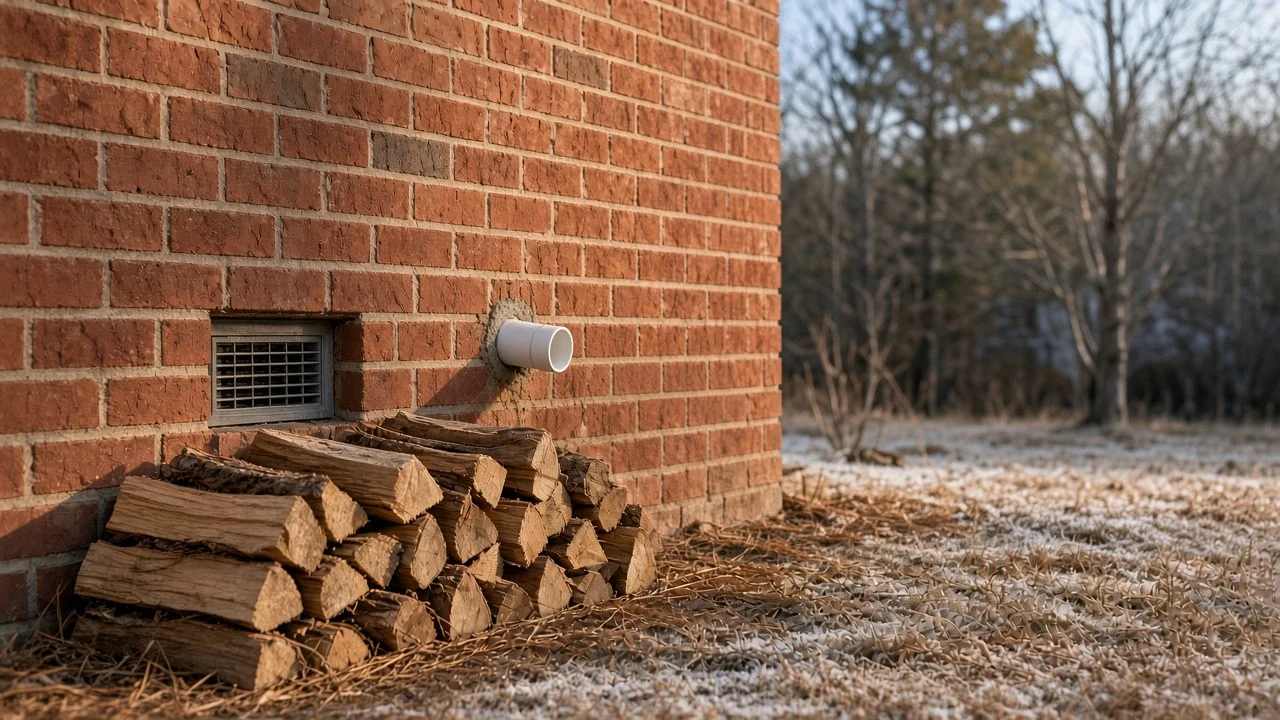
A woodpile against the house is convenient on a cold night, but it is also shelter for insects, spiders, and rodents right next to your walls. Wood touching the siding can give termites a direct route to the house, and damp wood can attract carpenter ants. Alabama Extension recommends storing firewood at least 20 feet from the home and about 5 inches off the ground, and inspecting it before you carry it inside. Bring in only what you plan to burn soon rather than keeping a big stack by the hearth.
Holiday decorations and storage boxes
Boxes of ornaments and lights often sit untouched in the attic, garage, or basement for most of the year. That quiet makes them appealing to mice, spiders, and silverfish. When you pull decorations down, look for droppings, chewed cardboard, shredded paper, or webbing before you carry boxes through the house. Plastic bins with tight lids hold up better than cardboard when you pack everything back up. Extension also suggests checking bags, boxes, and packages for hitchhiking bugs.
Extra food in the pantry and garage
Holiday baking, bulk groceries, and a big bag of birdseed for winter feeders all add up to more food for pests. Store flour, cereal, pet food, and seed in sealed containers, wipe up crumbs, and keep trash and recycling bins closed and away from the doors.
Moisture you might not notice
Pests need water as well as warmth. Leaky pipes, sweating ductwork, and damp crawl spaces give cockroaches, silverfish, and other pests what they need. Extension lists fixing leaks and clogged drains as part of pest-proofing.
A Winter Walkaround: What to Check
An hour on a dry afternoon can tell you a lot.
Outside:
- Walk the foundation and look for gaps around pipes, vents, and wires.
- Check door sweeps and the garage door seal. If you can see daylight, so can a mouse.
- Look up at the eaves, soffits, and vents for gaps or damage.
- Note branches touching the roof and shrubs pressed against the walls.
- Move the woodpile away from the house if it is stacked against the siding.
Inside:
- Look under sinks and behind the refrigerator and stove for droppings or small roaches.
- Check the attic, basement, and crawl space entry with a flashlight for droppings, nesting material, or gnawing.
- Inspect stored boxes in the garage and attic as you move them.
- Look at window sills on the sunny side of the house for clusters of beetles or bugs.
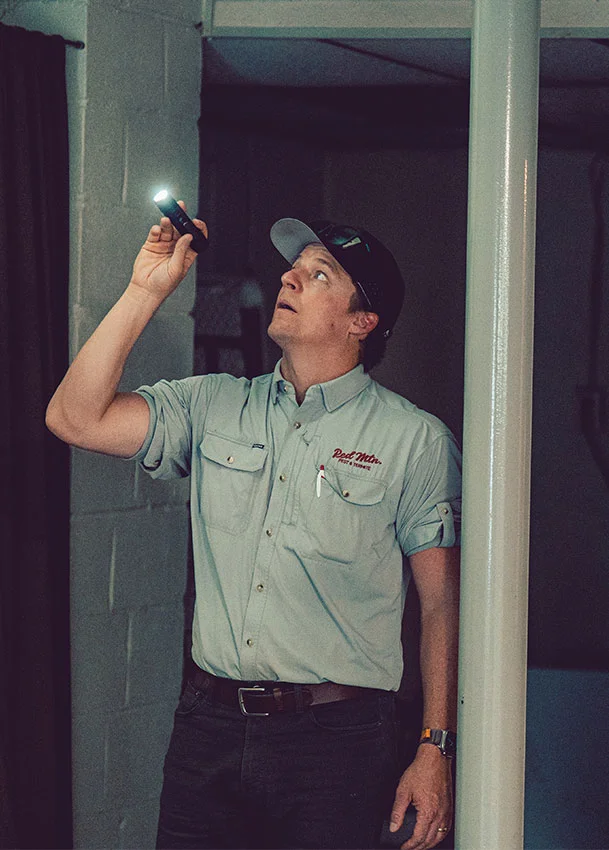
Write down what you find and where. A record beats a guess.
What a Winter Sighting Usually Means
- Scratching in the attic or walls at night. Often mice or rats, but not always. Squirrels, raccoons, and bats are wildlife and belong with a wildlife specialist.
- Beetles or stink bugs on a sunny window. Usually overwintering insects that came in during fall and are waking up on a warm day.
- Small tan roaches in the kitchen. Worth attention right away, since German cockroaches breed indoors.
- A large roach after a rainy spell. Often an outdoor roach that wandered in. One is not proof of an infestation.
- Droppings in stored boxes. A sign rodents have been using the space, possibly for a while.
For a broader look at what shows up in each season, see our seasonal guide to household pests in Birmingham.
What Not to Do
- Do not set off bug bombs or spray inside walls. Alabama Extension does not recommend insecticides indoors for overwintering insects. A vacuum is the better tool for the ones you see.
- Do not seal openings while animals may still be inside. Trapping rodents in a wall creates a new problem.
- Do not sweep or vacuum rodent droppings. That can stir particles into the air. Our attic guide walks through the CDC’s safer cleanup steps.
- Do not use store-bought bait carelessly. Follow the label and keep it away from children and pets.
How Red Mountain Pest & Termite Can Help
Winter is a good time to deal with the pests that are already inside and to close up the routes they use. For mice and rats, our mice and rat infestation control starts by identifying whether you have mice, rats, or both, then places traps and bait stations along the paths they travel. Our rodent exclusion service begins with a Property 360 walkthrough of the foundation, roofline, vents, and utility penetrations, and exclusion is quoted to your home after the walkthrough.
For year-round coverage, our quarterly general pest control plan covers everyday pests such as ants, roaches, spiders, and centipedes, and includes perimeter rodent baiting at every visit. You can compare options, including the 365 Bundle, on our service plans page.
Whether you live in Mountain Brook, Homewood, Vestavia Hills, or elsewhere around Birmingham, if you are finding droppings, hearing noises, or seeing pests that will not go away this winter, call Red Mountain Pest & Termite at 205-637-3260 or request a free quote. Tell us what you found and where, and we will help you figure out the next step.
Frequently Asked Questions
Do pests really stay active during an Alabama winter?
Many do. Pests that live indoors, like German cockroaches and house mice, stay active in a heated home. Others, like stink bugs and lady beetles, rest inside walls and become active on warm days. Fewer bugs outside does not mean the house is clear.
Why do I see bugs on my windows in winter?
They are often overwintering insects, such as lady beetles, stink bugs, kudzu bugs, or boxelder bugs, that slipped into the walls in fall. A warm, sunny day draws them toward the light. Vacuum them up and seal gaps before next fall.
Is it safe to bring firewood inside?
Bring in only what you will burn soon, and look it over first. Alabama Extension recommends keeping the woodpile at least 20 feet from the house and off the ground, so pests living in the wood are not right against your walls.
When should I pest-proof my home for winter?
Ideally in early fall, before insects and rodents start moving in. If you missed that window, it is still worth sealing obvious gaps now, as long as no animals are trapped inside.
Does Red Mountain handle squirrels or raccoons in the attic?
No. Our rodent work focuses on mice and rats. Squirrels, raccoons, bats, and other wildlife are a job for a wildlife specialist.