
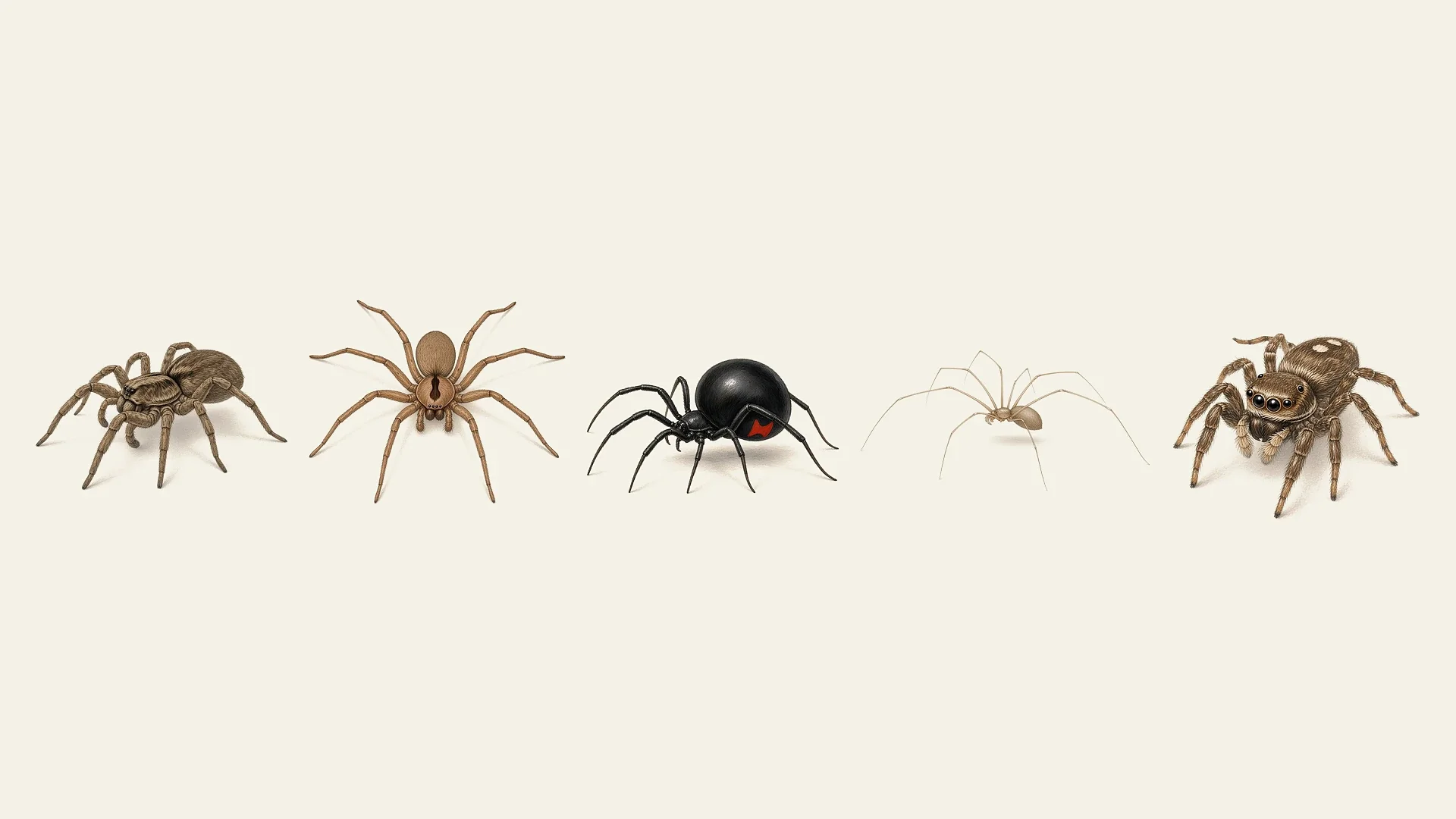
Most common house spiders in Alabama are harmless hunters that showed up because something else, usually small insects, drew them in. A cobweb in the corner of a window, a long-legged spider in the basement, or a fast brown spider crossing the garage floor can all look alarming at first glance. This guide walks through the types of house spiders homeowners often find, the clues that help tell them apart, the two species that call for caution, and practical ways to make your home less inviting. It is meant to help you identify what you are seeing, not to diagnose a bite.
Identifying Common House Spiders in Alabama: Start With a Few Clues
“Brown spider” and “black spider” describe a lot of different species, so color alone is rarely enough. A few other details narrow it down quickly:
- The web, or lack of one. Some spiders build webs and wait. Others, like wolf spiders and jumping spiders, hunt on foot and do not use a web to catch prey.
- Where you found it. A tangled web in a window corner, a flat web around a crack in the brick, and a spider running across the floor at night point to different groups.
- Body and legs. Look at overall size, how long and thin the legs are, whether the legs are banded or plain, and whether the abdomen is round, oval, or slender.
- The eyes. According to Alabama Cooperative Extension’s guide to black widows and recluses, most spiders have eight eyes, while recluse spiders have six arranged in three pairs. You usually need a magnifying glass and a good photo to see them.
If you want a closer look, take a clear photo from a safe distance rather than picking the spider up.
Types of House Spiders You Are Likely to See
These are spiders that commonly live in and around homes. Most are more nuisance than threat, and many help by eating insects.
Common house spider (American house spider)
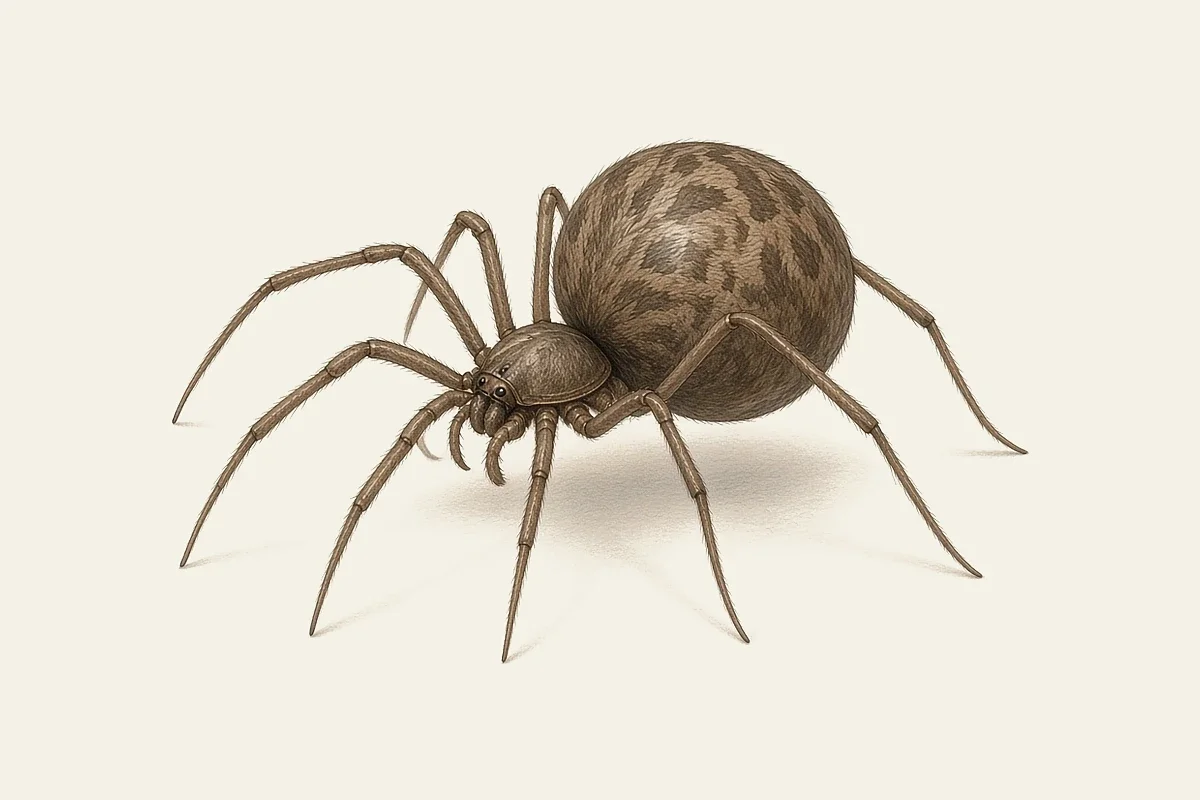
This small cobweb spider is behind many of the tangled webs in the corners of walls and windows, and it turns up often in basements and crawl spaces. It is about 1/4 inch long, brownish to grayish, with a rounded abdomen marked with darker chevrons and legs ringed with darker bands. It hangs in its web waiting for prey. Because it often abandons a web and builds a new one nearby, a single spider can leave several webs in a short time, which is why a room can look “infested” when only a few spiders are present.
Cellar spiders
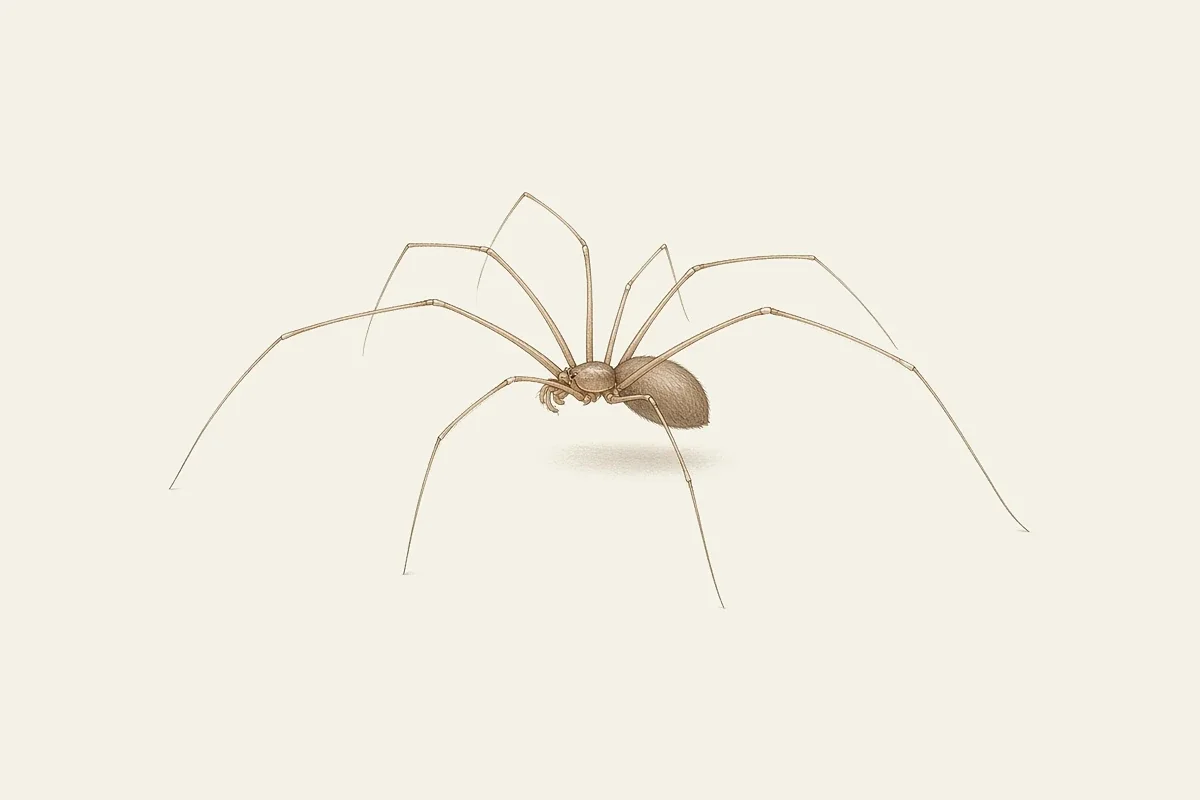
Cellar spiders have small pale tan to gray bodies and very long, thin legs, which is why many people call them daddy longlegs. They build loose, irregular webs in dark, quiet spots such as basements, crawl spaces, and the corners where walls meet the ceiling or floor.
Wolf spiders
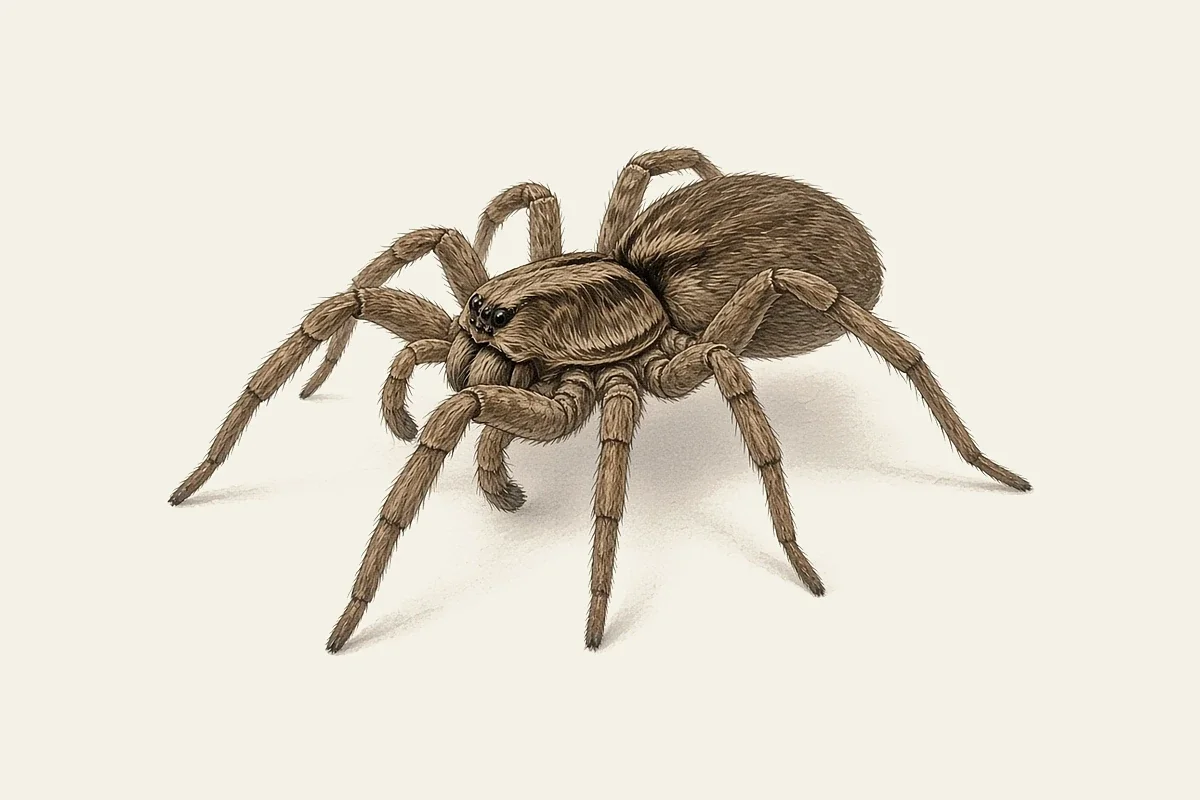
Wolf spiders are the big, fast, hairy brown spiders that make people jump. They range from about 1/4 inch to 1 inch long, with dark brown, slightly hairy bodies, often with mottled markings. They do not build webs to catch prey. Instead, they hunt on the ground, often at night, and wander indoors by accident, especially in fall. They are not aggressive and usually run away. Their size and brown color sometimes get them confused with a brown recluse, but wolf spiders have eight eyes, and their bodies and legs are noticeably hairy.
Southern house spider
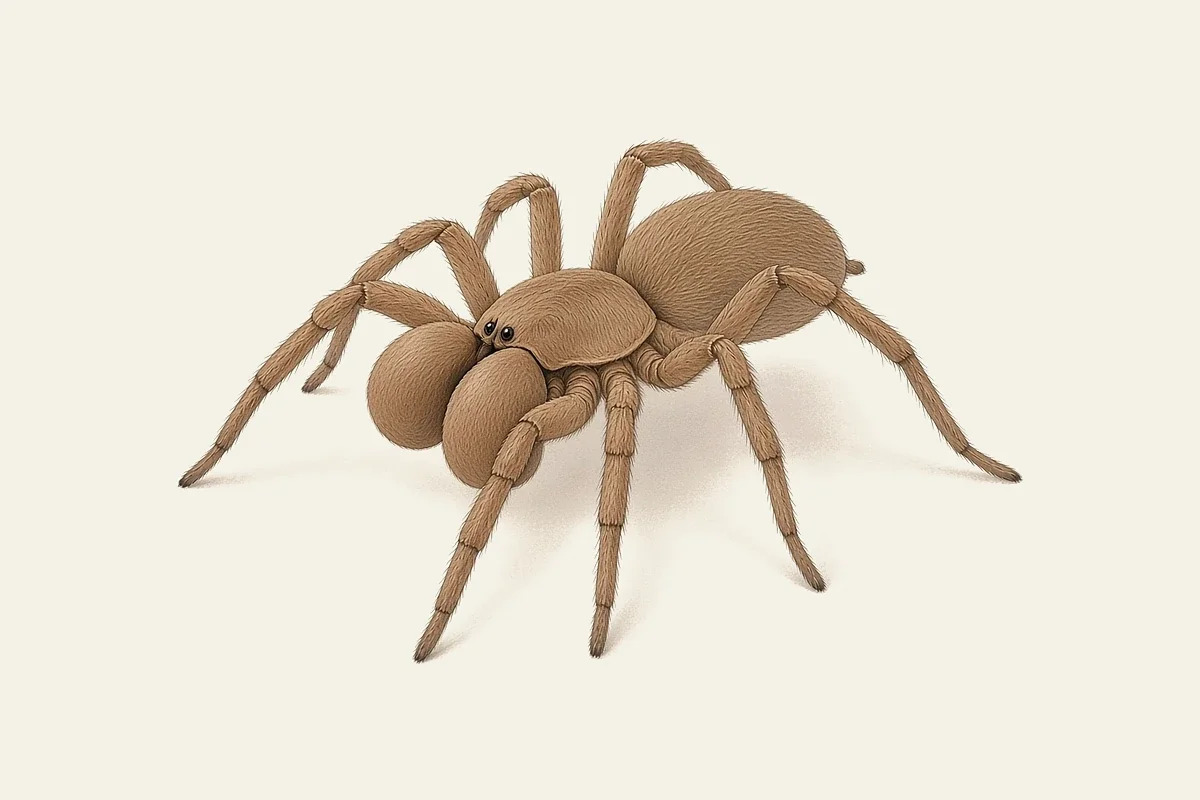
Females are charcoal gray, about 1/2 to 3/4 inch long, and stay hidden in a crack or crevice in masonry, around windowsills, shutters, and overhangs. The giveaway is the web: a flat, woolly-looking web that radiates out from the opening. Males look very different. They are tan to amber with long legs, and they wander in search of females. Males are often mistaken for brown recluses, but they have eight eyes clustered together on a small bump instead of a recluse’s six eyes in pairs.
Jumping spiders
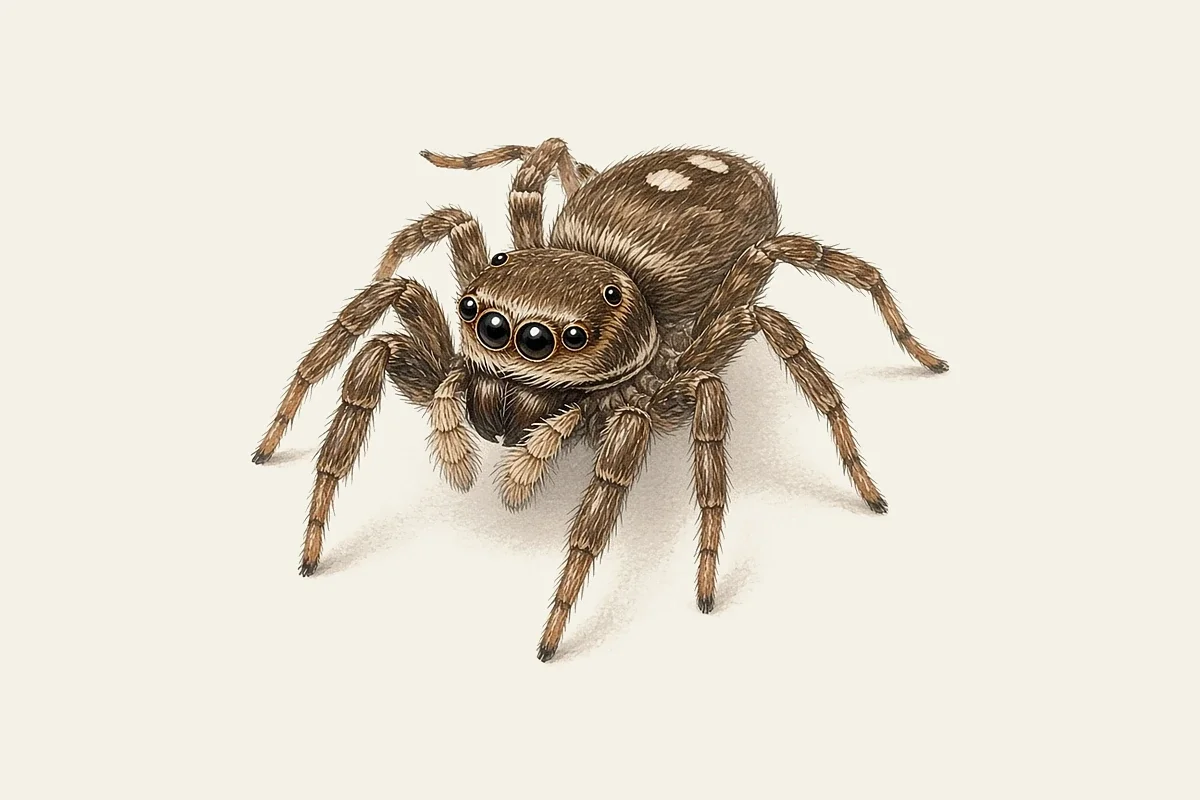
Jumping spiders are compact, about 1/4 to 1/2 inch long, and are often dark with white markings, though some are brightly colored. They are active during the day and are often seen on windowsills, walls, and ceilings in sunny spots. You will notice two large front eyes and a quick, jerky way of moving. They stalk and pounce on prey rather than building a catching web.
Sac spiders
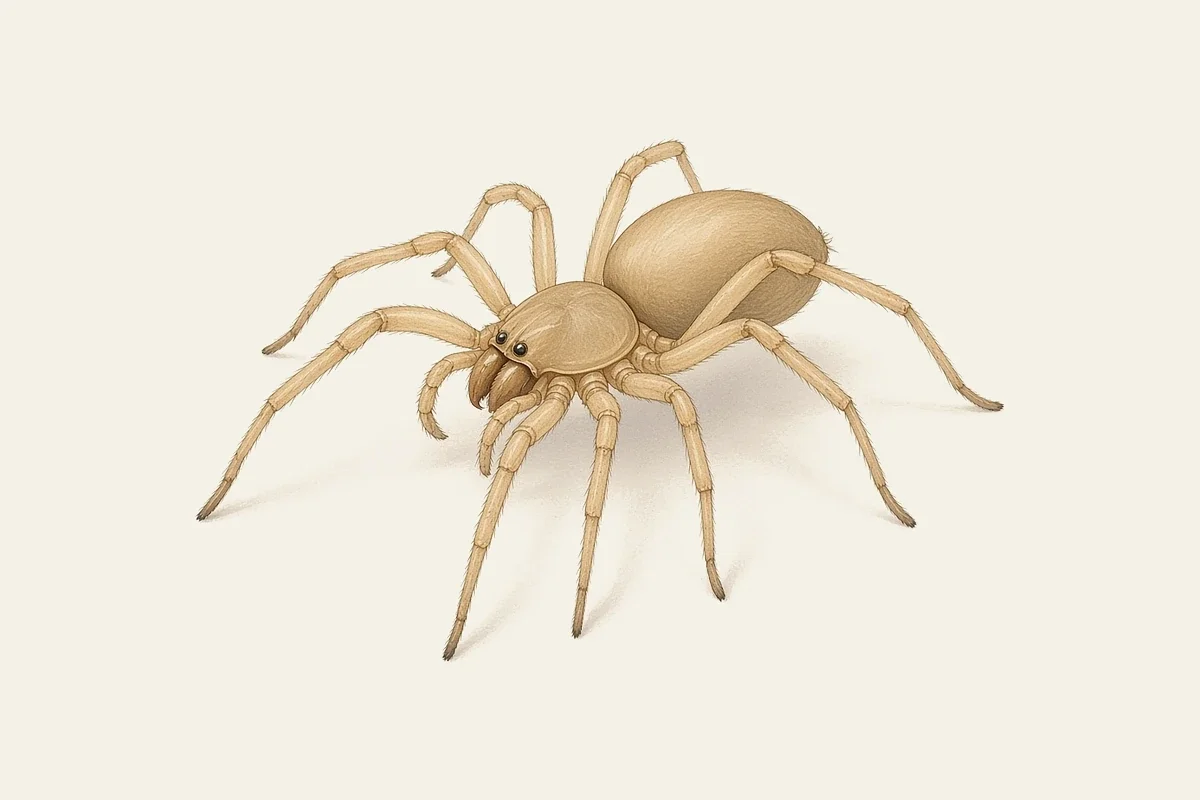
Sac spiders are small and usually pale yellow to light colored. They hunt at night and spend the day in a small silken sac, which you may spot high on a wall near the ceiling or in a corner. They do not build catching webs.
Orb weavers around the porch and garden
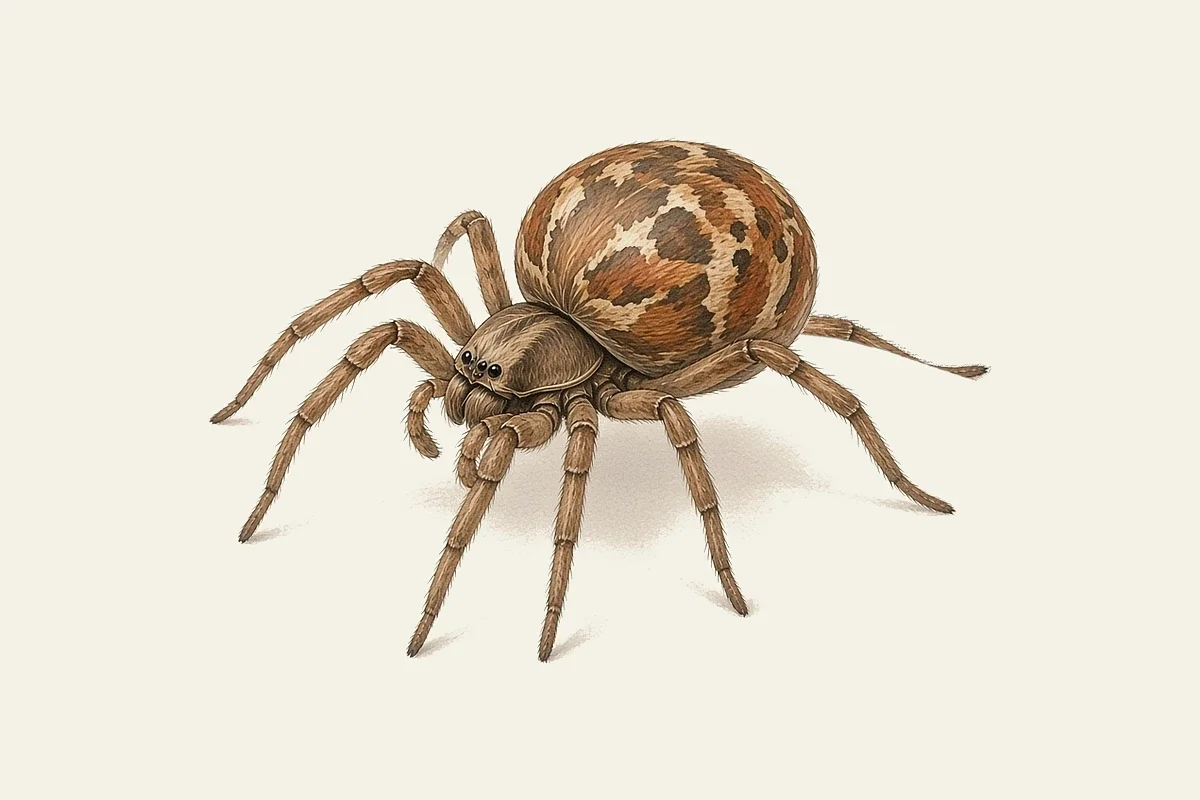
Orb weavers build the classic round, wheel-shaped webs. They are mostly outdoor spiders found on shrubs, porches, and around outdoor lights. The yellow garden spider, a large black and yellow spider with a zigzag band of silk in the center of its web, is a familiar example in fall. Seeing one on the porch does not mean spiders are living inside the house.
Quick Reference: Brown Spider, Black Spider, or Something Else?
| Spider | What to look for | Web or habit | Where you often see it |
|---|---|---|---|
| Common house spider | About 1/4 inch, brownish to gray, round abdomen, banded legs | Tangled cobweb | Wall and window corners, basements, crawl spaces |
| Cellar spider | Small pale body, very long thin legs | Loose, irregular web | Basements, crawl spaces, closets, ceiling corners |
| Wolf spider | Larger, hairy, dark brown, often mottled | No catching web; hunts on the ground | Floors, garages, near doors, often in fall |
| Southern house spider | Female dark gray; male tan with long legs | Flat, woolly web radiating from a crack | Brick and masonry, windowsills, shutters, overhangs |
| Jumping spider | Compact, often dark with white markings, large front eyes | No catching web; jumps on prey | Sunny windows, walls, and ceilings |
| Brown recluse | Tan to brown, violin mark, six eyes in three pairs, plain legs | Small, flat, irregular retreat | Boxes, closets, stored clothing, shoes, attics |
| Black widow (female) | Shiny black, round abdomen, red hourglass underneath | Messy, three-dimensional web | Meter boxes, faucets, sheds, garages, stacked materials |
Two Spiders That Call for Caution
The black widow, the northern black widow, and the brown recluse are among the spiders in the state that are potentially harmful to people. Neither the widow nor the recluse is aggressive, and bites usually happen when a spider is pressed against skin. Here is a short overview of each.
Brown recluse
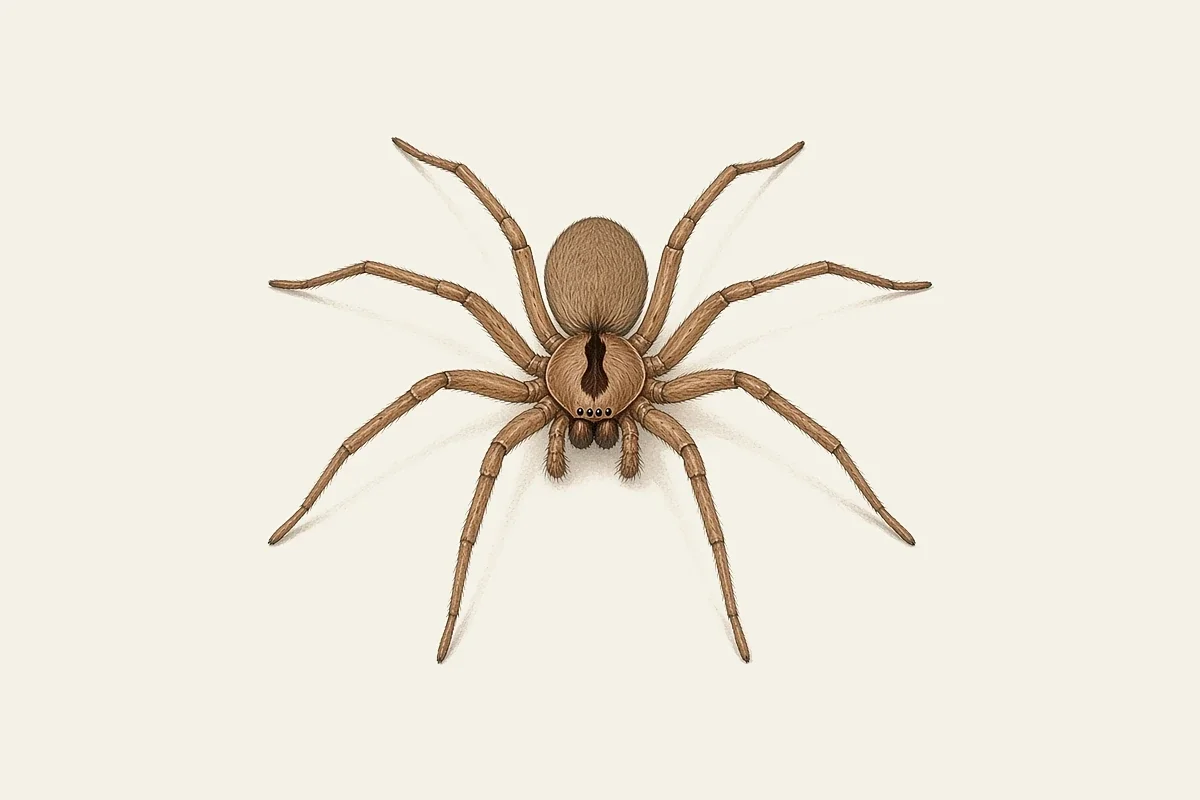
The brown recluse is light tan to dark brown and about 3/8 inch long, with a dark violin-shaped mark on the front body section, the neck of the violin pointing back toward the abdomen. That violin is easy to confuse with markings on harmless spiders, so the eye pattern is the most reliable sign: six eyes arranged in three pairs. Recluse legs are uniformly colored, with fine hairs and no spines or bands. Indoors, recluses tend to hide in undisturbed places such as storage boxes, closets, behind furniture, and in stored clothing and shoes. They build small, flat, irregular retreats rather than open webs, and shed skins stuck to the sides of boxes can be a sign they are present.
Black widow
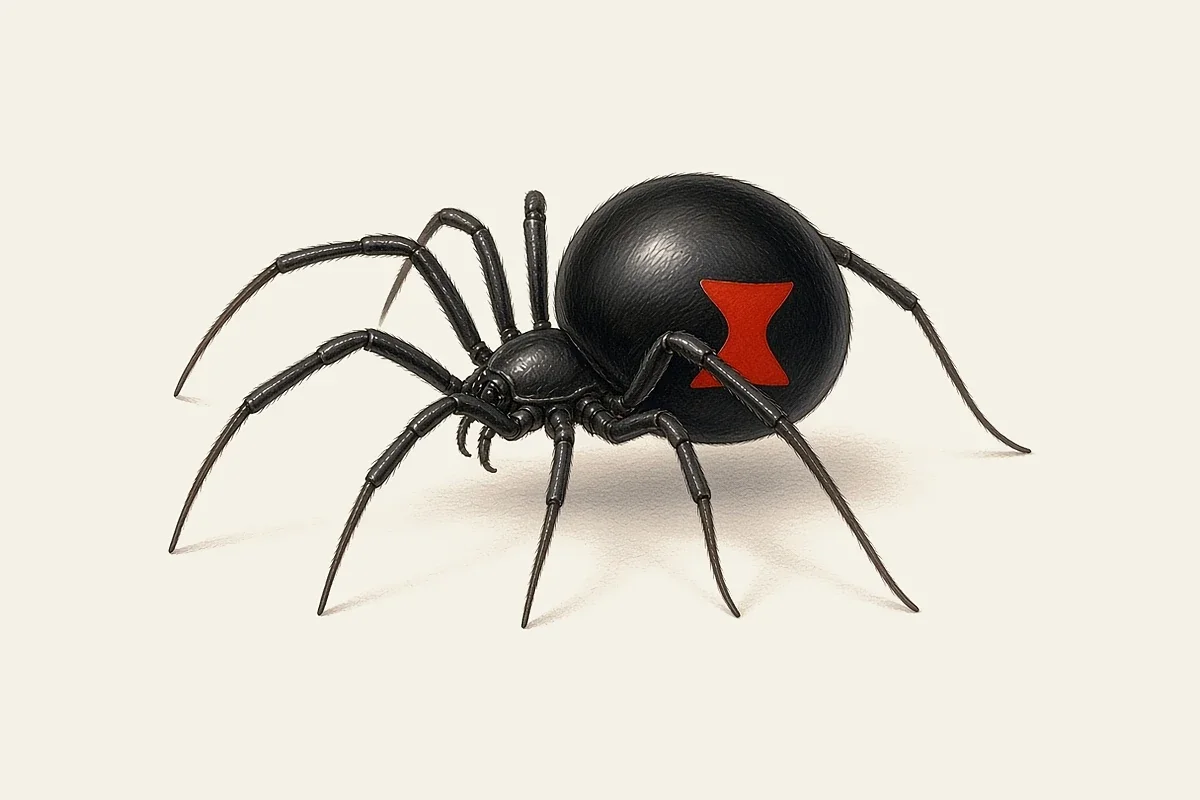
An adult female black widow is glossy black with a globe-shaped abdomen and a red hourglass on the underside. In the northern black widow, the hourglass is often split into two separate red marks, and some females have red spots along the back. Males are much smaller and brownish with red, white, and yellow markings, and young spiders are tan to gray with orange and white stripes. Widows build messy, three-dimensional webs in quiet, sheltered spots outdoors and in outbuildings: water meter boxes, outdoor faucets, eaves, sheds, garages, stacked blocks or lumber, and equipment. They are rarely found inside homes.
If you think someone has been bitten
Seek medical care promptly. Do not rely on the look of a wound to identify the spider. If the spider can be captured safely, or has already been killed, bring it along; even a crushed specimen can often be identified.
Why Spiders End Up Inside
Spiders follow their food. Insects gather around porch lights, windows, doors, and damp areas, and spiders move in to hunt them. Clutter, stored boxes, and rarely used rooms give them quiet places to hide and build webs. Hunting spiders such as wolf spiders tend to wander indoors in fall, and cooler weather pushes many pests toward the shelter of a house. Our guide to why pests come indoors during an Alabama winter covers that seasonal shift in more detail.
NC State Extension notes that finding a lot of spiders indoors usually means there are plenty of insects for them to eat. That is why lasting control focuses on the insects and the openings, not just the spiders you see.
How to Make Your Home Less Inviting to Spiders
A few habits go a long way:
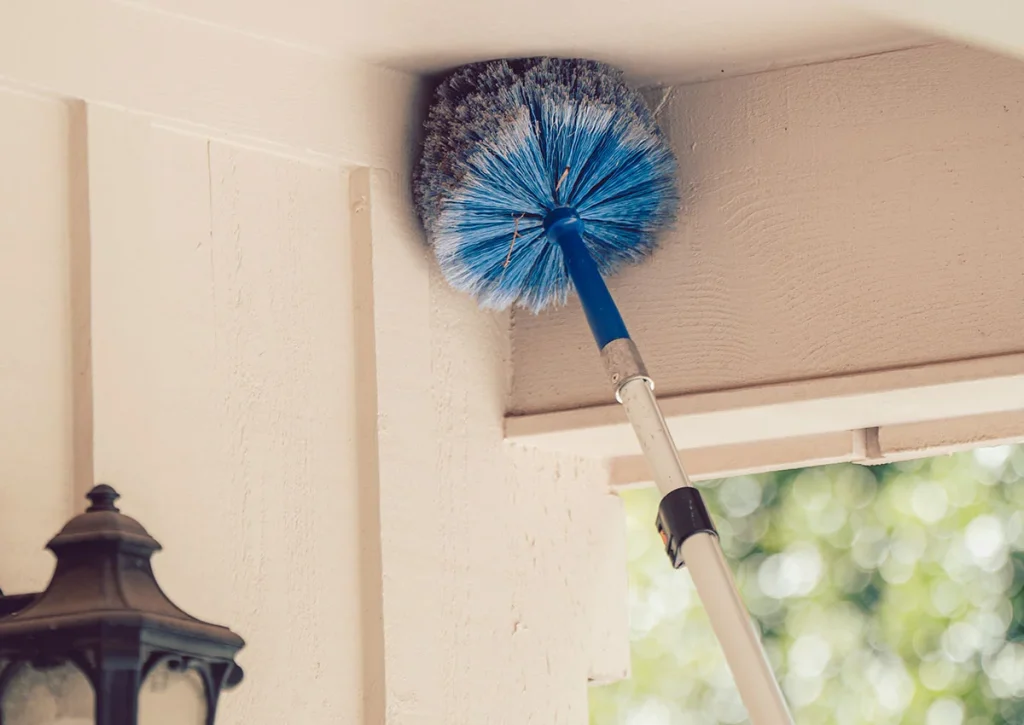
- Vacuum webs and egg sacs. Pay attention to corners, baseboards, behind furniture, and window frames, and empty the vacuum outdoors.
- Cut the clutter. Reduce stacks of cardboard and stored items in closets, garages, basements, and attics. Plastic bins with tight lids are less inviting than cardboard boxes.
- Seal gaps. Close cracks around windowsills, door thresholds, pipes, and vents, and keep screens and weatherstripping in good repair.
- Rethink outdoor lighting. Use yellow bulbs, or move lights away from the house, to draw fewer insects to doors and windows.
- Move harborage away from the walls. Firewood, stacked bricks or blocks, and leaf litter against the house give spiders shelter.
- Shake things out. Wear gloves when handling stored items and firewood, and shake out shoes, gloves, and clothing that have been sitting unused.
- Use sticky traps to monitor. Glue boards along baseboards and in closets help you see what is active and where.
Store-bought sprays can kill a spider on contact, but they usually address the problem only temporarily and are generally not as effective as reducing clutter.
When to Call a Professional
An occasional spider is normal. It may be time for help if you are seeing:
- Spiders in several rooms, week after week
- Webs that keep coming back around windows, eaves, and porches
- Egg sacs in quiet corners or storage areas
- A spider you believe is a brown recluse or black widow
- Lots of other insects indoors, which keeps spiders fed
How Red Mountain Pest & Termite Helps With Spiders
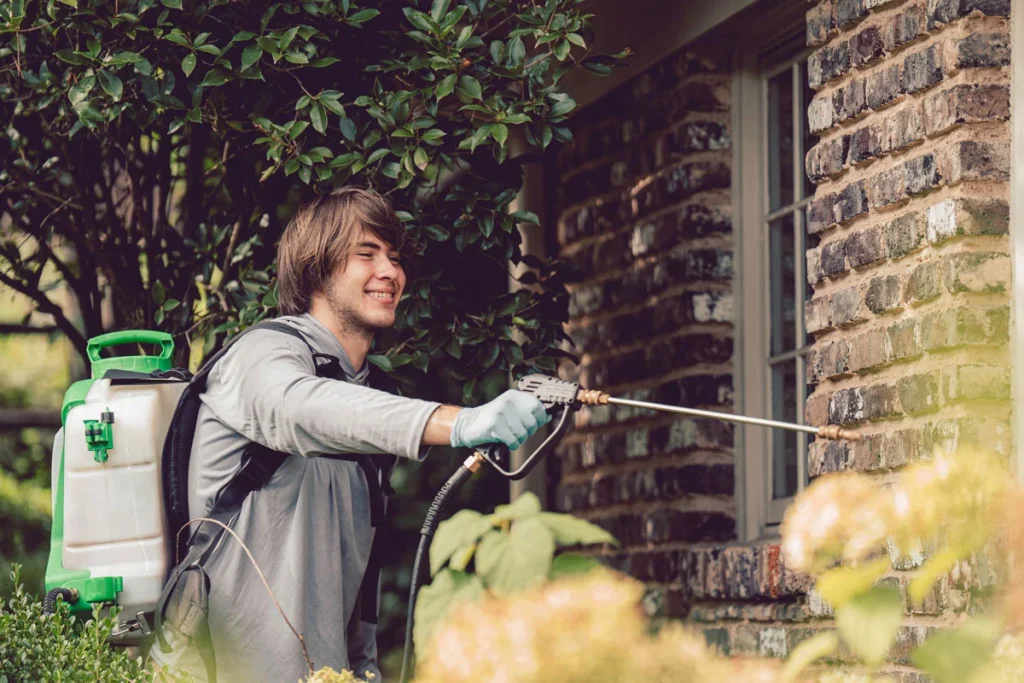
Our spider control starts with an inspection to find where spiders are getting in and what is drawing them. Spiders are covered by our Total Defense Plan, our quarterly pest control service. Every visit includes exterior de-webbing and de-nesting, clearing spider webs and flying-insect nests such as wasps and dirt daubers, plus spraying around the foundation, doors, windows, and eaves. Interior service, typically the kitchen, doors and windows, and spot treatments in problem areas, is done upon request.
Because the same service lowers the insects spiders feed on, it helps keep both in check. If you would like spiders and termites, or spiders and mosquitoes, covered on one plan, the 365 Bundle combines them. You can compare options on our service plans page.
Whether you live in Mountain Brook, Homewood, Vestavia Hills, or elsewhere around Birmingham, if spiders keep turning up or you have spotted one you are not sure about, call Red Mountain Pest & Termite at 205-637-3260 or request a free quote. Tell us what you are seeing and where, and we will help you sort it out.
Frequently Asked Questions
What are the most common house spiders in Alabama?
Spiders often found in and around homes include the common house spider, cellar spiders, wolf spiders, southern house spiders, jumping spiders, and sac spiders. Black widows and brown recluses also live in Alabama; see the caution section above for how to recognize them.
What is the brown spider in my house?
Many brown spiders are harmless, including wolf spiders, common house spiders, and male southern house spiders. The brown recluse is the one to rule out. Look for six eyes in three pairs, plain legs with no bands or spines, and a violin mark. If you are not sure, do not handle it; take a photo or have it identified.
What is the black spider in my house?
Dark spiders indoors are often jumping spiders, female southern house spiders, or dark wolf spiders. A female black widow is glossy black with a round abdomen and a red hourglass underneath, and she builds a messy web in quiet, sheltered spots, usually outdoors or in garages and sheds.
Are house spiders dangerous?
Most house spiders are not considered dangerous to people and rarely bite. The brown recluse and black widows are the exceptions to watch for. If you suspect a bite from either, seek medical care promptly.
Why do I see more spiders in the fall?
Hunting spiders such as wolf spiders often wander indoors by accident in fall, and cooler nights send many insects and other pests looking for shelter. Sealing gaps and reducing indoor insects ahead of fall helps.
Will a bug spray get rid of spiders?
A spray may kill the spider it hits, but store-bought products usually give only temporary results. Removing webs and egg sacs, reducing clutter, sealing gaps, and cutting down on the insects spiders eat work better over time.