Most termite questions in Alabama come down to one group of insects: subterranean termites. But there is more than one kind. The native eastern subterranean termite lives across the state, and the Formosan subterranean termite is an invasive species that has spread through much of the Southeast. If you have been reading about Formosan termites in Alabama and wondering whether that changes anything for your home, this guide explains how the two compare, how to tell them apart, and what to do if you find a swarm. It is general information, not an identification or inspection of your home.
The Short Answer
Formosan and native subterranean termites are both subterranean termites, and they live in similar ways. Both nest in the soil, both need moisture, both feed on wood and other cellulose, and both can do serious damage out of sight. The biggest differences are in the details:
- Soldiers. Formosan colonies have many more soldiers, and those soldiers are quick to defend a breached tube or nest.
- Swarm timing. Formosan termites swarm at night in late spring and are drawn to lights. Native subterranean termites usually swarm during the day, starting earlier in the year.
- Looks. Formosan swarmers are larger and caramel to yellowish brown. Native swarmers are smaller and dark.
- Nesting. Formosan termites can sometimes build nests above ground when they have a steady source of moisture.
For a homeowner, the practical steps are the same either way: watch for signs, fix moisture problems, and have a licensed professional inspect the house regularly.
What Alabama Sources Actually Say About Formosan Termites
The eastern subterranean termite (Reticulitermes flavipes) is widespread throughout Alabama, and it is the termite most homeowners around the state deal with. The Formosan subterranean termite (Coptotermes formosanus) is not native to the United States. It arrived after World War II in wooden cargo crates and pallets, and it has kept spreading in part because people move infested materials, such as old railroad crossties used in landscape walls.
Within Alabama, the picture is mostly coastal. In a 2021 article, the Alabama Cooperative Extension System said Formosan termites are most prevalent in hot, humid coastal counties such as Mobile and Baldwin, and that entomologists were seeing more serious infestations in central parts of the state. ACES also noted that Alabamians are seeing more infestations from both the Formosan and native species, and that Alabama’s climate lets termites stay active year-round in most of the state.
It helps to be precise about what that means. It is a statewide observation from extension entomologists, not a report on any particular city, neighborhood, or home. Around Birmingham, the termite you are most likely to run into is still a native subterranean termite. Whether a particular sample is Formosan is something only a proper identification can tell you.
Formosan vs. Eastern Subterranean Termites: How to Tell Them Apart
Workers, the termites doing the eating, look very similar in both species: small, pale, and soft-bodied. Swarmers and soldiers are the castes that help separate them, and even then it takes a careful look.
Swarmers (winged termites)
- Formosan: About 1/2 inch long from head to wing tips, with a caramel to yellowish-brown body. Under magnification, the wings have many tiny hairs.
- Native subterranean: About 3/8 inch long from head to wing tips, with a dark brown to black body. The wings do not have those hairs.
Soldiers
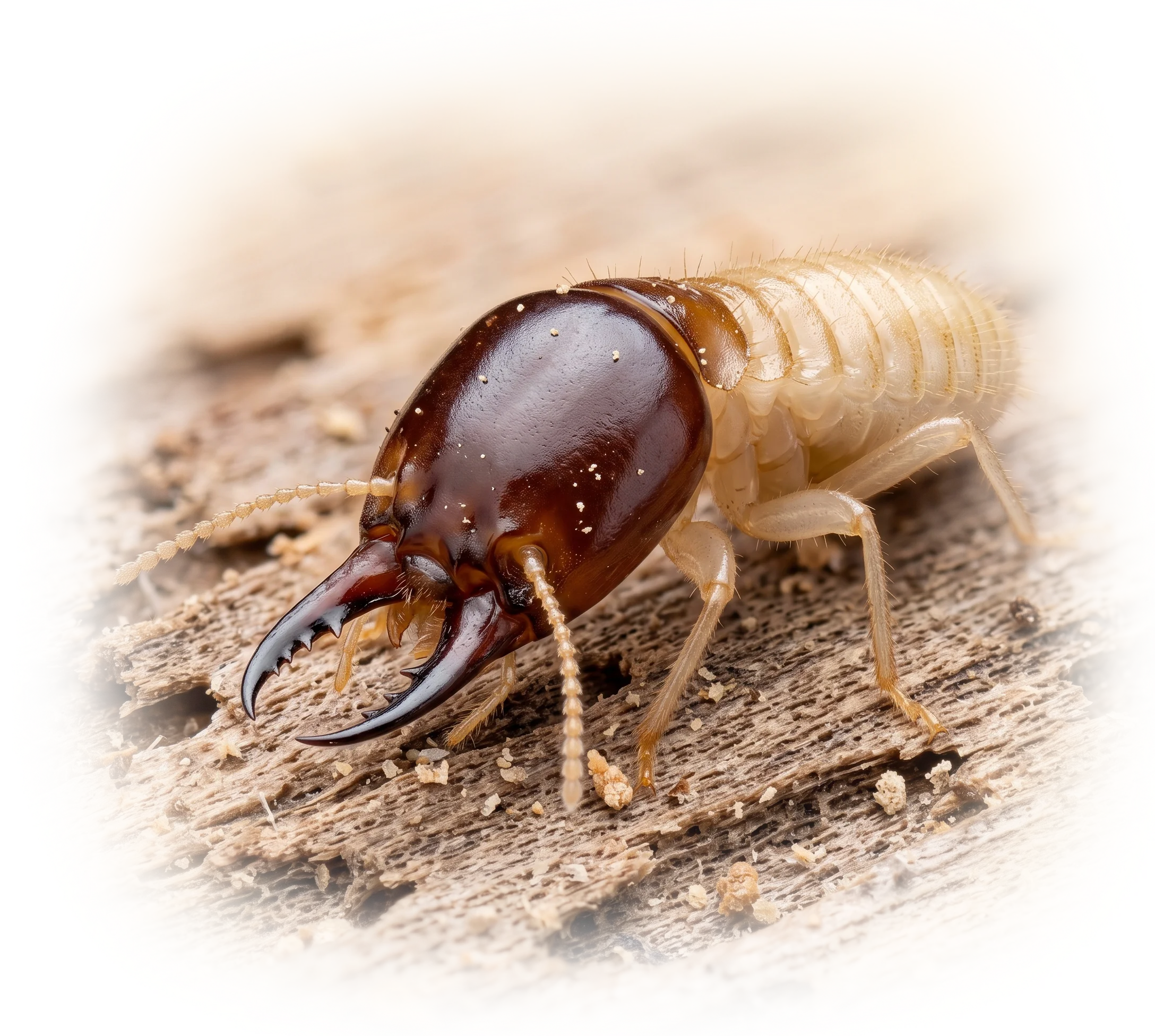
- Formosan: Soldiers have an oval or teardrop-shaped head and can make up roughly 10 to 20 percent of a colony. When disturbed, they often release a drop of white, glue-like fluid from the head. A broken mud tube or nest that fills quickly with aggressive soldiers is a classic Formosan clue.
- Native subterranean: Soldiers have a longer, more rectangular head and make up only a few percent of a colony, so you see fewer of them. They do not release the white fluid.
Swarm time and season
- Formosan: Swarms at night, usually from late May into June in Alabama. Swarmers are strongly attracted to lights, so they gather around porch lights, windows, and light fixtures after dark.
- Native subterranean: Usually swarms during the day, starting around late winter or early spring, and does not gather at lights at night.
Size and color vary, and other termites and insects can look similar or swarm at the same time. Flying ants are a common mix-up. Our guide to signs of termite damage covers the quick differences between ant and termite swarmers, plus the mud tubes and shed wings that usually show up first.
Quick comparison
- Native range: Eastern subterranean is native and widespread in Alabama. Formosan is invasive, most common on the coast.
- Swarmer color and size: Formosan is caramel to yellowish brown, about 1/2 inch. Native is dark brown to black, about 3/8 inch.
- Swarm time: Formosan swarms at night in late May and June, drawn to lights. Native swarms by day, earlier in the year.
- Soldier head: Formosan is oval to teardrop-shaped. Native is longer and rectangular.
- Soldiers in the colony: Formosan has many. Native has few.
- Nests: Both nest in soil. Formosan can also nest above ground near a steady moisture source.
What Is the Same for Both
The differences matter for identification, but much of what a homeowner needs to know applies to both termites.
- They come from the soil. Both build mud tubes to travel between the soil and wood, so tubes on a foundation, pier, or crawl space wall are a warning sign either way.
- They need moisture. ACES points to two things termites love, water and cellulose, and stresses timely repair of roof and plumbing leaks, removal of tree stumps and fallen logs, and moving wood debris away from the house.
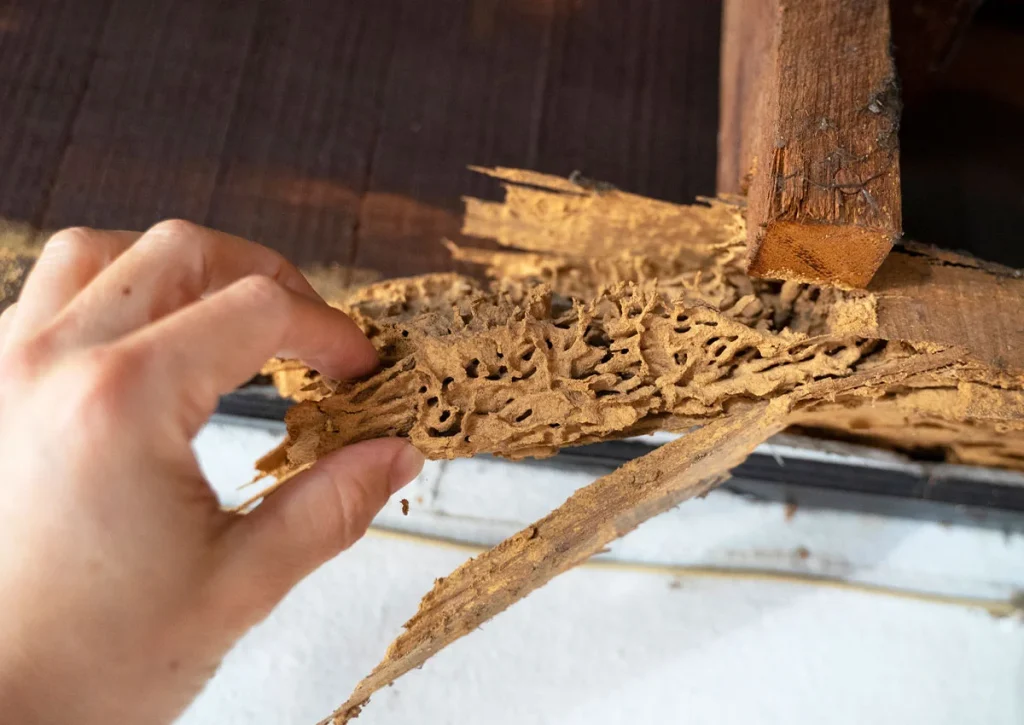
- The damage is hidden. Both tunnel through wood from the inside, so the surface can look fine while the wood behind it is hollowed out. Soft or damaged wood is not always termites, though. Our post on termite damage vs. wood rot explains how to tell the difference.
- Swarms mean a colony is nearby. Swarmers come from established colonies. Seeing them inside, or finding piles of shed wings on windowsills, is worth a professional look regardless of species.
Why Formosan Termites Get Extra Attention
ACES calls the Formosan termite the most dreaded destroyer of homes. That reputation comes from how its colonies behave, not because it is a different kind of pest. Formosan termites can hollow out wood quickly, leaving a thin outer shell, and they are better able to nest above ground. If a roof leak, plumbing leak, or other source keeps wood or framing wet, a Formosan colony can build a nest of chewed wood and soil, called carton, inside a wall, attic, or other space and may not need contact with the soil at all. Those nests are often high in the structure and hard to find, and spray foam insulation can hide both leaks and termite activity.
That is one more reason to fix leaks quickly and keep an eye on any area of the house that stays damp. It is also why a homeowner should not try to diagnose an infestation from a single sighting.
Found Termite Swarmers? What to Do Next
A swarm is unsettling, but it calls for a few calm steps, not panic.
- Note the time and date. A swarm around the porch light on a May or June night tells you something different from a daytime swarm in early spring. Write down when and where you saw it.
- Save a few. Put several swarmers, or any soldiers you find, in a small, tightly sealed container. Those are the castes that make identification possible.
- Look for wings. Check windowsills, light fixtures, porch light covers, and spider webs for shed wings or dead swarmers.
- Skip the spray. Spraying the termites you can see does not reach the colony feeding out of sight.
- Get a professional inspection. A licensed inspector can look for mud tubes, damaged wood, and moisture problems and tell you what is going on at your house.
If you want to know the exact species, Auburn University’s Mizumoto Lab offers free termite identification for Alabama samples. The lab asks for several termites, ideally soldiers or swarmers, in a sturdy sealed container, along with the collection date and location. It does not confirm identifications by phone. The lab also keeps an Alabama termite map, and it notes that a county record shows a species was documented in an area at some point. It does not mean a particular property has an active infestation.
Prevention Works the Same Way
You do not need a separate plan for each termite. The same habits make a house less inviting to both:
- Fix roof leaks, plumbing leaks, and clogged gutters promptly, and keep downspouts draining away from the foundation.
- Keep mulch, soil, and pine straw from piling up against siding or covering the top of the foundation.
- Remove stumps, fallen logs, and buried wood near the house, and store firewood and lumber away from the foundation.
- Avoid wood touching soil, such as siding, trim, or deck posts that sit directly on the ground.
- Be cautious with used railroad crossties and secondhand landscape timbers.
- Schedule an annual termite inspection, and make sure the inspector can reach the crawl space, garage, and under sinks.
How Red Mountain Pest & Termite Can Help
Red Mountain has served Birmingham homeowners since 2013. We are licensed, insured, and locally owned. Whatever kind of termite you are worried about, the first step is a termite inspection of the crawl space, sill plates, foundation walls, and any wood that meets soil, so we know whether termites are active and what conditions are inviting them.
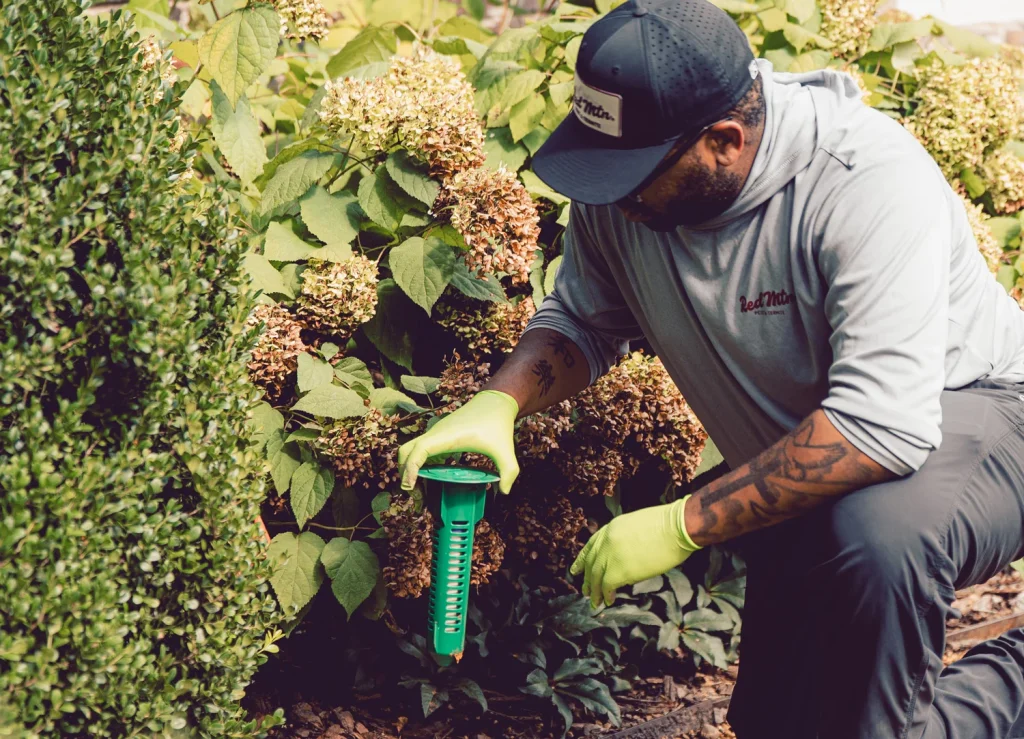
For protection, we use Sentricon termite baiting. Sentricon is built for subterranean termites, and its bait is labeled for both the Formosan and the native subterranean termite groups. Stations are set in the soil around the foundation, and termites that feed on the bait carry it back to the colony. Ongoing coverage runs through Termite Guard, which includes the Termite Bond, an annual inspection, and Sentricon management. If you would rather have termites and everyday pests on one plan, the 365 Bundle combines them. You can compare options on our service plans page or read more about our termite control. If you are weighing baits against liquid treatments, our guide to termite baits vs. liquid treatment explains the tradeoffs.
We do not perform termite damage repairs. If repairs are needed, you will need a qualified contractor.
Whether you live in Mountain Brook, Homewood, Vestavia Hills, or elsewhere around Birmingham, if you have found swarmers, wings, or mud tubes, call Red Mountain Pest & Termite at 205-637-3260 or request a free quote. Tell us what you are seeing, and we will help you figure out the next step.
Frequently Asked Questions
Are there Formosan termites in Alabama?
Yes. Alabama Cooperative Extension reports that Formosan termites are most prevalent in coastal counties such as Mobile and Baldwin, with more serious infestations being seen in central parts of the state. The native eastern subterranean termite is still the most widespread termite across Alabama.
Are Formosan termites worse than native termites?
Alabama Cooperative Extension calls Formosan termites the most dreaded destroyer of homes. Their colonies carry many more soldiers, and they can nest above ground near a moisture source, which makes them harder to find. Native subterranean termites still cause serious damage, though. Either one is worth taking seriously.
How can I tell if I have Formosan termites?
Clues include caramel to yellowish-brown swarmers flying at night around lights in late May or June, and soldiers with oval heads that release a white fluid. A sure answer takes a sample of soldiers or swarmers examined by an expert.
Is the treatment different for Formosan termites?
The basics are the same: find the activity, correct moisture problems, and treat the colony. Above-ground nests can call for extra inspection work. A licensed termite professional will recommend a plan based on what the inspection finds.
When do termites swarm in Alabama?
Native subterranean termites usually swarm during the day, starting in late winter or spring. Formosan termites swarm at night, mostly from late May into June.