Finding small dark pellets in a kitchen drawer, under the sink, or in a box in the attic is a good reason to slow down before you grab a broom. Mouse droppings cleanup is one of those jobs where the method matters: sweeping or vacuuming rodent droppings can put contaminated particles into the air. This guide covers how to tell mouse droppings from other look-alikes, what their location can tell you, step-by-step cleanup precautions, and why cleaning up is only half of the problem. It is general information, not medical advice or a diagnosis of your home.
What Mouse Droppings Look Like
House mouse droppings are small, about 1/8 to 1/4 inch long, roughly the size and shape of a grain of rice. They are typically rod-shaped with one or both ends narrowing to a point. They are usually black or very dark brown, though color can vary with what the mouse has been eating.
A few other details help:
- They are scattered, not piled. Mice drop pellets as they travel and feed, so you tend to find them spread along a route, in a drawer, or along the back of a shelf rather than in one heap.
- There can be a lot of them. A single house mouse can leave roughly 50 to 75 droppings a day, so a handful of mice can make a mess quickly.
- Fresh versus old. Fresh droppings are generally darker and softer. Older ones dry out, turn dull or grayish, and crumble.
Mouse droppings vs. rat droppings
Size is the quickest way to tell them apart. Rat droppings are much larger, roughly 1/2 to 3/4 inch long, and thicker, with blunter ends. If the pellets you found are closer to the size of a raisin or an olive pit than a grain of rice, you are more likely dealing with a rat. Our guide to roof rats vs. Norway rats explains how rat droppings and the places you find them can point to one species or the other.
Other droppings that get mistaken for mice
- Cockroach droppings. Smaller cockroaches leave specks that look like black pepper or coffee grounds. Larger cockroaches, such as the American cockroach, leave pellets with blunt ends and visible ridges along the sides. Rodent droppings are smooth.
- Bat droppings. Bat droppings are similar in size to mouse droppings, but they tend to collect in piles under a roost or entry point, and they break down into a powder that contains shiny bits of insects. Rodent droppings are firmer and do not crumble that way unless they are very old. Do not handle them to find out. If you suspect bats, that is a job for a wildlife specialist.
- Larger droppings in the attic. Droppings noticeably bigger than a rat’s, especially with daytime noise overhead, can point to squirrels, raccoons, or other wildlife. Those also belong with a wildlife specialist.
Not sure? Photograph the droppings with a coin for scale and leave them in place until you can clean safely.
Where You Find Droppings Tells You Something
Mice tend to leave droppings near where they feed and travel. Common spots include:
- Kitchen drawers, cabinets, and the pantry, especially near grains, cereal, pet food, or birdseed
- Under sinks and behind or beneath the refrigerator, stove, and dishwasher
- Along baseboards and walls, which mice use as travel lanes
- Garages, basements, and crawl space entries
- Stored boxes, holiday decorations, and closets that are rarely disturbed
Look for other signs nearby. Fresh gnaw marks on food packaging or cardboard, nests of finely shredded paper or fabric near warm spots like water heaters and appliances, dark greasy rub marks along walls or pipes, and a musky odor in enclosed spaces all point to mice. Our post on why pests come indoors during an Alabama winter covers the seasonal checks that help you catch these signs early.
Rodent droppings in the attic
Rodent droppings in the attic often show up on top of insulation, along rafters and beams, around stored boxes, and near the attic hatch. Mice and rats both use attics, and the size of the droppings is your best early clue. If you have also been hearing scratching overhead, our guide to rodent activity in the attic or walls explains how timing and sound help narrow down what is up there.
Before You Clean: Why You Should Not Sweep or Vacuum
Diseases are mainly spread from rodents to people when they breathe in contaminated air. Sweeping or vacuuming dry urine, droppings, or nesting material can send tiny droplets and dust into the air you are breathing. The CDC’s hantavirus prevention guidance notes that when fresh urine, droppings, or nesting materials from an infected rodent are stirred up, the virus can get into the air, and that avoiding contact with rodents and their urine and droppings is the best way to prevent infection.
You usually cannot tell by looking whether a particular mouse carried anything, so the safe approach is to treat all rodent droppings with the same caution. That means skipping the broom and vacuum and cleaning wet instead.
Mouse Droppings Cleanup: Step by Step
These steps follow the CDC’s guidance on how to clean up after rodents.
- Air out the space first. For a room, shed, garage, or similar enclosed space, open doors and windows for 30 minutes before you start, and stay out of the area while it ventilates.
- Put on rubber or plastic gloves.
- Choose your disinfectant. Use a household product with the word “disinfectant” on the label, or mix a fresh bleach solution of 1.5 cups of household bleach per gallon of water (about 1 part bleach to 9 parts water). Never mix bleach with ammonia or other cleaners.
- Soak the droppings and urine. Spray until very wet and let it sit for 5 minutes, or as long as the disinfectant label directs.
- Wipe up with paper towels. Pick up the droppings and cleaning solution together, then throw the towels away in a covered trash can that is emptied regularly.
- Disinfect the surrounding surfaces. Mop or sponge floors, countertops, cabinets, and drawers in the affected area with disinfectant.
- Wash up. Wash your gloved hands with soap and water or disinfectant before taking the gloves off, then wash your bare hands with soap and warm water.
Nests and dead mice
Spray the nest or dead mouse and the area around it with disinfectant and let it soak. Place it in a plastic bag, along with any used trap you do not plan to reuse, tie the bag closed, then put it in a second bag and tie that one too before it goes in a covered trash can. Fleas are common on rodents, so use an EPA-registered insect repellent on clothing and shoes when handling dead rodents or nesting material.
Food, fabrics, boxes, and papers
- Food: Throw away any food in packaging that mice have chewed into or soiled.
- Bedding, clothing, and stuffed toys: Wash in hot water with detergent, then machine dry on high or line dry in the sun.
- Carpet and upholstery: Shampoo with a commercial disinfectant or a commercial-grade steam cleaner or shampoo.
- Cardboard: Throw away boxes that are contaminated with urine or droppings. Plastic, glass, and metal containers can be disinfected.
- Books and papers: Items that cannot be cleaned with liquid can be left outdoors in sunlight for several hours, or set aside in a rodent-free indoor area for at least three weeks.
Attic insulation, air ducts, and heavy infestations
If exposed insulation is contaminated with droppings and urine, place it in plastic bags for removal. If rodents have gotten into heating and cooling ducts, have a professional remove the rodents and use a company that specializes in duct cleaning. Homes with heavy infestations, or buildings that sat vacant with many rodents, call for extra protective equipment, including coveralls, boots or shoe covers, goggles, and a properly fitted respirator with HEPA filters. For a job that size, consider hiring a qualified cleanup or remediation company, or ask your local health department for guidance.
What Not to Do
- Do not sweep, vacuum, or use a shop vac, leaf blower, or pressure sprayer on droppings or nests before they have been soaked and removed.
- Do not pick up droppings, nests, or dead mice with bare hands.
- Do not seal up holes while mice may still be inside. They can die in the walls and create odor problems.
- Do not scatter loose poison where children, pets, or other animals can reach it. If you use any product, follow its label exactly.
Health Questions: Talk to a Doctor
Talk with a healthcare provider if you think a recent illness could be related to rodents, and tell them about the exposure. Your local health department can also answer questions about a specific situation. If you have health concerns, consult a doctor.
Cleaning Up Is Only Half the Job
Droppings are a symptom. As long as mice are getting in and finding food, they will come back no matter how carefully you clean. Mice can get through openings as small as 1/4 inch, so a gap around a pipe, a worn door sweep, or a garage door that no longer seals can be enough.

Lasting control usually comes down to three things working together:
- Removing the mice already inside with traps or bait stations placed along the routes they travel
- Cutting off easy food by storing pantry items and pet food in sealed containers and keeping trash closed
- Sealing entry points with materials mice cannot chew through, once the mice inside have been dealt with
How Red Mountain Pest & Termite Helps With Mice
Our rodent control work focuses on mice and rats. For an active problem, our mice and rat infestation control starts with a Property 360 walkthrough to find where mice are nesting, traveling, and feeding. From there, technicians place traps and tamper-resistant bait stations where the activity is, and the one-time rodent service includes a follow-up visit the next week to check results and adjust.
When it is time to close the gaps mice are using, our rodent exclusion service seals entry points around the foundation, roofline, vents, and utility lines. Exclusion is quoted separately, after we show you where your home needs sealing.
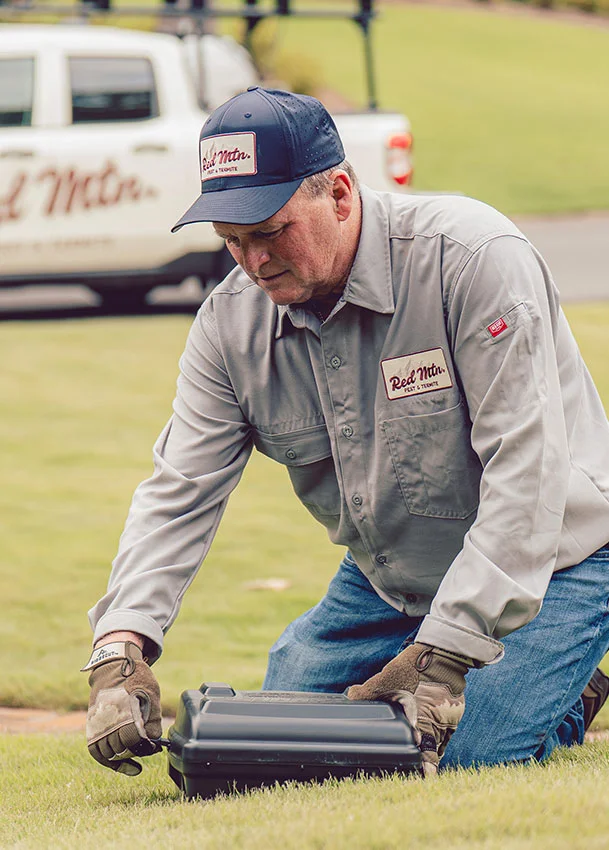
For ongoing protection, our Total Defense Plan covers everyday pests around your home, and many accounts include exterior rodent bait boxes that technicians open and restock when there has been feeding. If you also want termite or mosquito coverage on one plan, the 365 Bundle combines them. You can compare options on our service plans page.
To be clear about what we do and do not do: Red Mountain does not offer droppings cleanup, sanitation, insulation replacement, or repairs. We focus on getting mice and rats out and helping keep them out. Squirrels, raccoons, bats, and other wildlife are referred to a wildlife specialist.
Whether you live in Mountain Brook, Homewood, Vestavia Hills, or elsewhere around Birmingham, if you keep finding droppings or are not sure what left them, call Red Mountain Pest & Termite at 205-637-3260 or request a free quote. Tell us what you found and where, and we will help you figure out the next step.
Frequently Asked Questions
Can I vacuum mouse droppings?
Do not vacuum or sweep rodent droppings, urine, or nesting material, because it can put particles into the air. Soak them with disinfectant, wipe them up with paper towels, and disinfect the area instead. If you already vacuumed, follow the cleanup steps above from there.
How can I tell if mouse droppings are old or new?
Fresh droppings are usually darker and softer, while old droppings are dry, dull, and crumbly. The most reliable test is to clean an area safely and check it again over the next few days. New droppings in a cleaned spot mean mice are still active.
What should I do about rodent droppings in the attic insulation?
Do not vacuum or blow the insulation around. Contaminated exposed insulation should be bagged for removal, and heavy contamination calls for more protective equipment. Many homeowners hire a qualified insulation or cleanup contractor for that part. Red Mountain does not remove or replace insulation, but we can help with the mice or rats that caused it.
Does a few droppings mean I have a lot of mice?
Not necessarily. One mouse can leave dozens of droppings a day, so a small number of mice can leave a lot of evidence. Repeated fresh droppings in several areas, gnaw marks, nests, or a musky smell suggest a more established problem.
Does Red Mountain clean up after mice?
No. We do not offer cleanup, sanitation, or insulation replacement. We handle mouse and rat control and exclusion; for cleanup, follow the steps above or hire a cleanup company.