
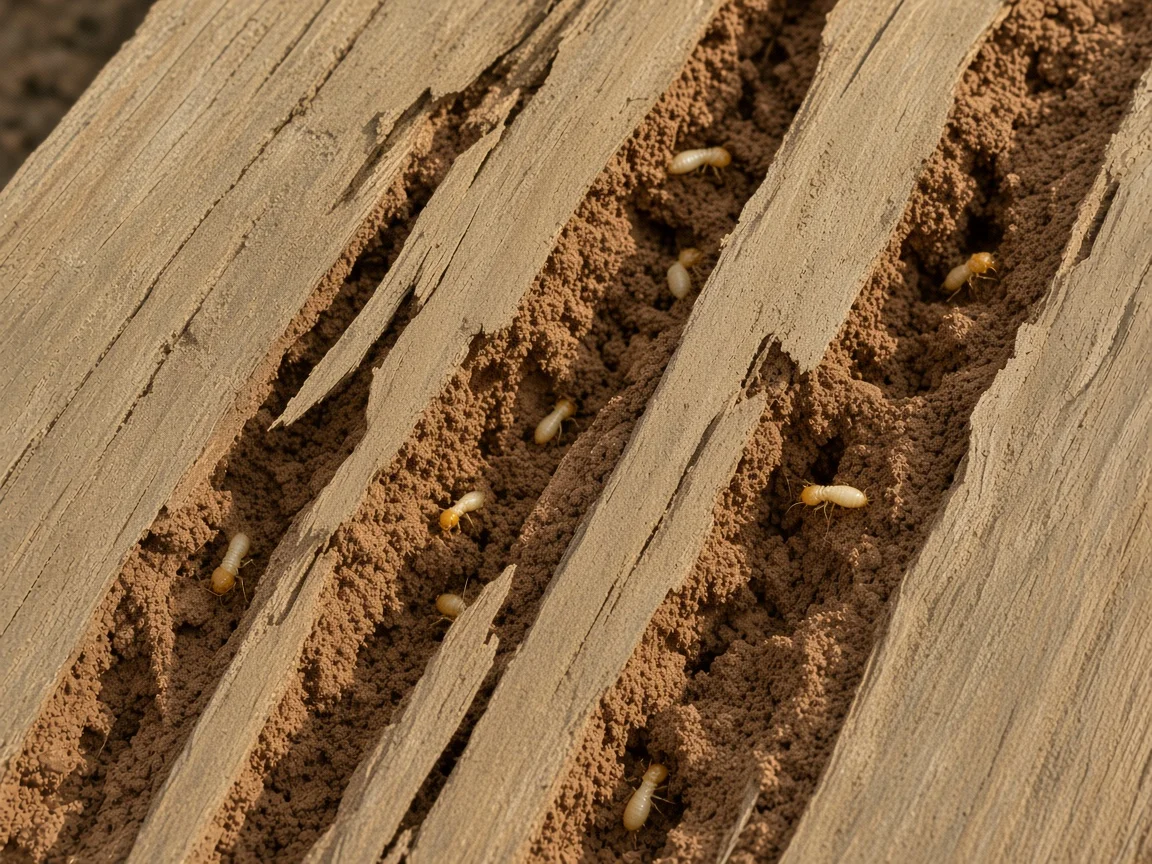
The most common termite damage signs a homeowner can actually see are narrow mud tubes on a foundation or pier, piles of shed wings near windows and doors, wood that sounds hollow or looks blistered, and small spots of dried mud or sunken trails on walls. Termites stay hidden inside soil and wood, so by the time any of these show up, a colony may have been feeding for a while. This guide explains what each sign looks like and where to check. It is educational, not a diagnosis of your home, and it does not assess structural safety.
Why Termite Damage Is Easy to Miss
The EPA notes that native subterranean termites are the most common type across most of the United States. They live in the soil and reach wood through tunnels and mud tubes, so they rarely show themselves in the open. University of Maryland Extension explains that they tunnel inside wood and can leave an outer shell that looks normal from the outside. As the EPA puts it, most people do not realize they have termites until they see a swarm or come across damage during construction or a remodel.
Alabama Cooperative Extension (ACES) adds that termite activity is low in winter, then rising soil temperatures in spring bring vigorous foraging. ACES recommends an annual inspection instead of waiting for visible damage.
Mud Tubes on Foundations, Piers, and Walls
Mud tubes (also called shelter tubes) are one of the clearest termite damage signs. Workers build them from soil and other material so they can travel between the ground and wood without drying out. University of Maryland Extension describes them as dirt tunnels typically about 1/4 inch wide, sometimes wider.
- Outside foundation walls, especially where siding meets the slab or block
- Crawl space piers, foundation walls, and plumbing that runs up from the soil
- Garage walls and concrete expansion joints
- Along baseboards and door frames, or occasionally hanging from a ceiling or running across exterior trim
Mississippi State University Extension calls a mud tube running up a foundation or pier “usually a sure sign” that a building is infested. Breaking off a small section and checking whether it gets rebuilt over a few days can show the tube is active. But simply destroying tubes does not control termites—the colony is still in the soil and can find other routes, and the tube you can see may not be the only way in.
Swarmers and Shed Wings
Winged termites (swarmers) leave mature colonies to start new ones. ACES notes swarming typically happens on warm, humid, calm days, often after a rain. Indoors, swarmers are drawn to light at windows, doors, and fixtures, and University of Maryland Extension notes most die of dehydration inside. They shed their wings, so a small pile of identical, see-through wings on a windowsill is often the first clue homeowners find.
Mississippi State Extension notes a colony takes several years to grow large enough to produce swarmers, so swarmers emerging from walls or floors point to an established colony feeding on the building. Swarmers right beside the foundation outdoors deserve a closer look too.
Flying ants swarm at similar times and are often mistaken for termites. Swarmers indoors versus outdoors, and flying ants versus termites, will get their own articles. The quick version from the EPA and University of Maryland Extension: termites have straight antennae, a thick waist, and wings of roughly equal length; ants have elbowed antennae, a pinched waist, and front wings longer than the back pair.
Signs of Termites in Walls
Because subterranean termites feed from the inside out, signs of termites in walls are usually subtle. Extension sources describe several clues:
- Pinholes sealed with mud. Mississippi State Extension describes BB-sized spots of dried mud on drywall, paneling, or trim where termites broke through and patched the opening.
- Sunken or winding lines. Termites do not eat gypsum, but they will eat the paper facing on drywall, which can leave narrow, sunken trails under paint or wallpaper.
- Blistered or peeling paint on wood. University of Maryland Extension links this to moisture under the paint from termite activity.
- Brittle drywall or bulging wallpaper. ACES lists both among the easier-to-spot signs.
- Soil packed in cracks and crevices where dirt does not belong.
Leaks and settling can cause similar symptoms, so treat these as reasons to look closer, not proof.
What Termite Damaged Wood Looks Like
Termite damaged wood often looks fine on the surface. Signs to watch for include:
- Wood that sounds hollow or dull when tapped
- Darkened or blistered areas in wood flooring, trim, or paneling
- Galleries inside the wood, often with dried soil or mud packed in them
The EPA suggests probing exposed wood for hollow spots with a flathead screwdriver or similar tool. Mississippi State Extension notes that galleries containing dried dirt indicate termite damage—though if no termites are present, it could be older damage from an infestation treated in the past.
Soft or damaged wood is not always termites. Wood rot can look similar at a glance, and we plan to cover termite damage vs. wood rot separately.
Floors, Door Frames, and Other Hints
ACES and University of Maryland Extension list sagging floors among possible signs, and Mississippi State Extension mentions problems such as a broken door frame. These can also come from moisture, settling, or construction issues, so they are a reason for an inspection rather than a conclusion. This article cannot tell you whether any part of your home is structurally sound; for safety concerns, talk with a qualified contractor or structural professional.
One more clue: small, uniform, six-sided pellets piling up on a floor or counter point to drywood termites, a different type than subterranean termites.
Conditions That Invite Termites
Termites follow moisture and wood. ACES and the EPA list conditions that make a home more attractive, including:
- Plumbing leaks, roof leaks, and clogged or leaking gutters
- Soil kept wet against the foundation by poor grading or drainage
- Firewood, lumber, or wood debris stored against the house
- Tree stumps and flower beds right next to the foundation
- Shrubs growing against exposed wood or blocking vents
Note these and share them with your inspector. Repairs to leaks, drainage, or damaged wood are jobs for the appropriate contractor.
What to Do If You Find Signs
- Do not panic. University of Maryland Extension notes termites must work in a home for quite a while to cause structural damage, and you can take weeks to evaluate the problem and decide on treatment.
- Take photos and note where you found mud tubes, wings, or damaged wood.
- Save a few swarmers in a sealed bag or on clear tape so they can be identified.
- Skip store-bought sprays into walls; Extension sources stress that killing swarmers or destroying tubes does not reach the colony.
- Schedule a professional inspection to confirm what you are seeing and how far it reaches.
Red Mountain Pest & Termite can help when you are ready. Our termite inspections check the crawl space, sill plates, foundation walls, and wood that meets soil for active signs and the moisture conditions that draw termites in. If we find activity, we will walk you through your termite control options, including Sentricon® termite baiting to target the colony at its source. For ongoing protection, our Termite Guard plan includes the Termite Bond, an annual inspection, and Sentricon station management, and it can be combined with other services in a 365 Bundle.
If you have spotted mud tubes, wings, or hollow-sounding wood around your home in Mountain Brook, Homewood, Vestavia Hills, or elsewhere around Birmingham, call Red Mountain Pest & Termite at 205-637-3260 or request a free quote. Tell us what you found and where, and we will help with the next step without pressure.
Frequently Asked Questions
What are the first signs of termites in a house?
For many homeowners, the first signs are swarmers or piles of shed wings near windows and doors, or mud tubes on the foundation or in the crawl space. Hollow-sounding wood and blistered paint can show up too, often later.
Do mud tubes always mean termites are active?
Not always. Old tubes can remain after an infestation was controlled. Mississippi State Extension suggests breaking a small section and checking whether it is rebuilt, but recommends a professional inspection whenever you find tubes on a foundation.
Can you see termite damage from the outside of a wall?
Sometimes. Look for mud-sealed pinholes, sunken lines under paint, blistered paint, or brittle drywall. Much damage stays hidden behind an intact surface, so no visible signs does not rule termites out.
How often should a home be checked for termites?
ACES and Mississippi State Extension both recommend annual inspections, since infestations are hard to see and can go unnoticed for years. ACES points to late spring and early summer as good times to schedule one.
Sources: Alabama Cooperative Extension System — Schedule Your Termite Annual Inspection; Mississippi State University Extension — Signs of Termite Infestation; University of Maryland Extension — Termites; U.S. EPA — Termites: How to Identify and Control Them.