
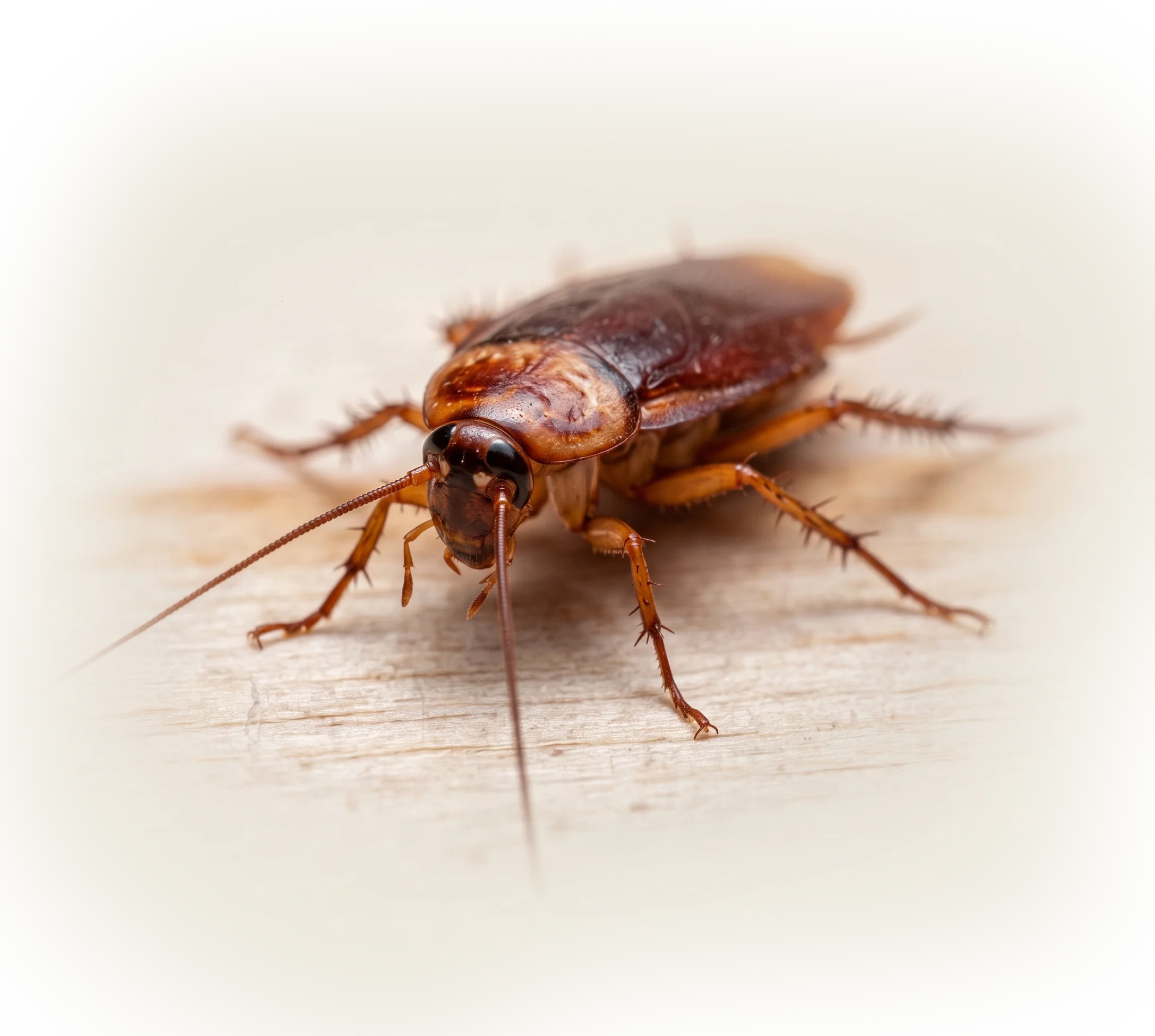
You flip on the kitchen light and something brown skitters across the floor. Or you find a large, shiny roach near a drain after heavy rain. In Birmingham and across the South, the first question is often the same: Is that a palmetto bug—or a German cockroach? Those moments feel similar, but they are not the same insect and they do not usually mean the same thing for your home. Slow down and identify what you saw before you reach for a spray. This guide is educational, not a diagnosis of your specific home.
What People Mean by “Palmetto Bug”
“Palmetto bug” is a Southern nickname, not one scientific species. Extension sources commonly use the name for large outdoor-associated cockroaches—especially the American cockroach (Periplaneta americana). In humid Southern states, people also apply it to other large species such as the smokybrown cockroach (Periplaneta fuliginosa). A palmetto bug vs cockroach question is really about which cockroach you have. A German roach vs American roach comparison clarifies whether you are dealing with a wanderer from outside or an indoor breeding population.
German Cockroach Identification
The German cockroach (Blattella germanica) is the classic indoor infestation species. Adults are about 1/2 to 5/8 inch long, light brown to tan, with two dark, nearly parallel stripes on the shield behind the head (the pronotum). They have wings but rarely fly. Extension guides describe them as the most common cockroach in residences—especially kitchens and bathrooms.
German roach nymphs and “baby roaches”
Young German cockroaches are nymphs—smaller, darker, and without fully developed wings. University fact sheets note that nymphs still show the distinctive dark bands on the pronotum. First-stage nymphs may be only about 1/8 inch long. Lots of tiny dark “baby roaches” around sinks, appliances, or cabinets—not one large outdoor-type adult—usually points to German cockroach activity.
German cockroach eggs
German cockroach eggs are carried in a purse-shaped egg case called an ootheca. The female typically carries that case, protruding from her abdomen, until the eggs are nearly ready to hatch. A typical case holds roughly 30 to 40 eggs and is only about 1/4 to 1/3 inch long—helping German cockroaches build indoor populations faster than many larger outdoor species. Extension sources also note that cockroaches can contaminate food and surfaces as they forage, and that shed skins and droppings can contribute allergens that bother some people. That is a reason to take kitchen sightings seriously, not a claim that one insect diagnoses a specific illness.
American Cockroach / Palmetto Bug Identification
The American cockroach is one of the largest common pest cockroaches. Adults are roughly 1 1/2 to 2 inches long, reddish brown, with a pale yellowish or “halo-like” border on the pronotum. Adults have well-developed wings and may glide or fly on warm Southern evenings. Texas A&M and Clemson Extension note that American cockroaches are also called waterbugs or palmetto bugs in everyday speech.
Nymphs lack full wings and often start grayish brown before becoming more reddish brown. Egg cases are larger and darker than German oothecae—often about 3/8 inch long—and the female typically drops or glues the case in a sheltered spot rather than carrying it until hatch. A uniformly smoky-brown large insect without the yellowish pronotum border may be a smokybrown cockroach, another outdoor species sometimes called a palmetto bug.
Side-by-Side: German Roach vs American Roach
- Size: German adults about 1/2–5/8 inch; American adults about 1 1/2–2 inches.
- Color and markings: German—light brown/tan with two dark parallel stripes on the pronotum. American—reddish brown with a pale yellow border or halo on the pronotum.
- Wings: German adults rarely fly; American adults may glide or fly on warm nights.
- Nymphs (“baby roaches”): Both lack full wings. German nymphs stay small and keep the dark stripe pattern; American nymphs grow much larger and turn more reddish brown.
- Eggs: German females carry a small ootheca until near hatching (~30–40 eggs). American females leave a larger, darker case in a sheltered site sooner.
- Where found: German—indoors, especially kitchens and bathrooms. American—outdoors, sewers, drains, and moist sites; indoors often after rain or near utility rooms.
- One sighting: One large outdoor-type roach after rain or near a drain is often a wanderer. Repeated small striped adults or nymphs in the kitchen usually mean an indoor German problem.
Where You’re Likely to See Each in a Birmingham-Area Home
German cockroaches hide by day near food and water: under and behind refrigerators and dishwashers, in cabinet hinges, around sink plumbing, and in bathroom vanity voids. Nighttime kitchen sightings, pepper-like fecal spots, or clusters of small nymphs are classic clues. They hitchhike in grocery bags, cardboard, and used appliances more often than they walk in from the yard.
American cockroaches and other large “palmetto bugs” favor moist outdoor harborage—mulch, leaf litter, wood piles, storm drains, and sewer-related sites. After heavy rain, a large adult may enter through a garage gap, door sweep, dryer vent, or floor drain. Smokybrown cockroaches, also common in the humid South, use mulch, gutters, tree holes, and sometimes attics or soffits. One large outdoor-type roach near a door or drain is not the same problem as German nymphs in the pantry.
Why Telling Them Apart Matters
Identification shapes the response. German cockroaches live and breed indoors and can grow quickly because females carry many eggs close to hatch. Treatment usually focuses on indoor harborage, sanitation, and targeted baits. A large American or smokybrown that wandered in after rain may call for sealing entry points, reducing outdoor moisture and clutter, and checking drains—not the same playbook as a kitchen German infestation.
University IPM guidance notes that heavy aerosol spraying can repel and scatter German cockroaches into other rooms and interfere with baits. Guessing “it’s just a palmetto bug” when you have German nymphs in the cabinets delays the right approach. For how Red Mountain treats cockroaches—and for plan options—see our cockroach control page.
Sensible First Steps
- Clean crumbs, grease, and pet food promptly; store food in sealed containers and empty trash regularly.
- Fix drips and standing water under sinks and around appliances; reduce cabinet clutter where small roaches hide.
- Check grocery bags, cardboard, and secondhand appliances before they stay indoors.
- Outside, pull mulch back from the foundation and note gaps at doors, vents, and utility penetrations.
- Be cautious with broadcast sprays and “bug bombs.” NC State Extension and UC IPM note that sprays often give only temporary knockdown, can repel and disperse German cockroaches, and may keep them from feeding on baits. Follow every label—or leave treatment to a professional.
When to Call for Help
- Repeated sightings of small light-brown roaches with two dark stripes, especially at night in the kitchen or bath
- Multiple “baby roaches” (nymphs) or egg cases in cabinets or appliance voids
- Activity spreading to new rooms despite cleanup
- Uncertainty whether you have German cockroaches or occasional large outdoor roaches
Red Mountain Pest & Termite can help once you are ready for a technician. General cockroach pressure may be addressed under our quarterly pest plan—Total Defense Plus, listed at $125 initial and $45 per month, which includes cockroach control. Established German cockroach infestations are handled with a dedicated German Roach service listed at $295 for two visits (initial plus a follow-up about two weeks later). Year-round options are available through 365 Bundle plans when that fit makes sense.
If you would like someone to take a look, call Red Mountain Pest & Termite at 205-637-3260 or request a free quote. Tell us size, color, stripes, and where you saw the insect—we will help with the next step without pressure.
Frequently Asked Questions
Is a palmetto bug the same as a German cockroach?
No. “Palmetto bug” usually means a large outdoor-associated cockroach such as the American—and sometimes the smokybrown. German cockroaches are much smaller, light brown with two dark stripes behind the head, and typically live and breed indoors.
What do German roach nymphs or baby roaches look like?
They are wingless, often darker than adults, and usually show the same two dark bands on the pronotum. Hatchlings may be only about 1/8 inch long. Many tiny nymphs around sinks or appliances point more to a German problem than one large outdoor-type adult.
Does seeing one large roach after rain mean my house is infested?
Not necessarily. Large outdoor species often live in moist outdoor sites and sewers and may wander indoors after rain. One large visitor is different from repeated German cockroach sightings or nymphs in food areas. Still, seal entry points and reduce outdoor harborage.
How can I tell German cockroach eggs from other roach egg cases?
German females carry a small, purse-shaped ootheca until the eggs are nearly ready to hatch; a typical case holds about 30 to 40 eggs. American egg cases are larger and darker, and females usually leave them in a sheltered spot sooner. A small striped female with a capsule behind her is a classic German clue.
Sources: Clemson Cooperative Extension — Cockroach Control (HGIC 2449); NC State Extension — German Cockroach Surveillance and Management; University of Maryland Extension — Cockroaches; Rutgers Cooperative Extension — German Cockroach; UC IPM — Cockroaches.